Peering out from behind juice shops and adjacent to a tyre puncture repairman at the Deen Dayal Upadhayay Marg here is the office of the National Commission for Women (NCW), a sleepy recommendatory body trying to cope with the demands of a country where gender discourse saw a sharp change a year ago.
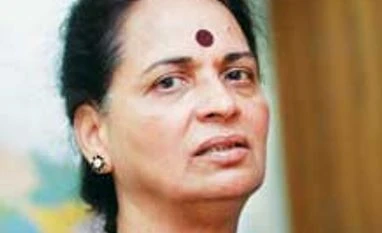
Inside, commission member Nirmala Samant Prabhavalkar and her staff are discussing whether to hire a couple of legal interns to beef up the team. She says she has to write detailed reports, which can form the basis of judgments, and could do with some help. A bevy of mediapersons wait outside her office, some with video cameras.
Samant has spent the morning with a key and vocal member of the government's legal team, Additional Solicitor-General Indira Jaising, a meeting for which she postponed an interview with this reporter.
| NATIONAL COMMISSION FOR WOMEN |
Set up in 1992. Autonomous, but budget and appointments are tied to parent ministry. It can make suggestions on law and policy concerning women, but cannot enforce them. Can move suo moto or on its own in a crime case, speeding up its outcome, offering legal and medical help, and can be a pressure group on government to offer financial compensation
Current structure: 5-member body. Every member has 3-year term - Chairperson: Mamta Sharma
- Members: Charu Walikhanna, Hemlata Kheria, Nirmala Samant Prabhavalkar, Shamina Shafiq and Laldingliani Sailo
Budgetary outlay for 2011-12: Rs 12.29 crore - For 2012-13, Rs 15.60 crore, an increase of 27%
- For 2013-14, Rs 8.45 crore, a rise of 18%
- 28 states have state women commissions. They are also autonomous and do not report to the national body
|
Her concern: While sexual harassment at the workplace saw a law in place this year, the rules in this regard are yet to be framed. "So many new things are coming out," says Samant, one of the five members of NCW.
The fact that all high-profile cases in the country in the last fortnight have had a woman at the receiving end may not be just a coincidence. Experts say the increased reporting of crime against women and the outrage surrounding these is a positive sign. NCW has engaged with a few of these cases. It has reached out to the Tehelka reporter who charged the magazine's editor Tarun Tejpal with sexual assault at the workplace, and asked her whether she needed legal help. It has sought authentication of a letter written by a Gujarat businessman that said he had asked Chief Minister Narendra Modi for the surveillance of his grown-up daughter.
In between, the commission has also shown eagerness to give out unprepared media statements, saying it is withdrawing from the Modi case.
The umbilical cord NCW is an autonomous body and can take suo moto action on crime against women on its own accord. Its powers, though, are recommendatory and for funding and appointments it is dependent on the Ministry for Women and Child Development.
This year, the commission's budget stands at Rs 20 crore.
"They can only make recommendations and (these) are not binding on the government. Their funding comes from the parent ministry and so, autonomy is lost," says lawyer Aparna Bhat, who has been the commission's legal counsel in the past and represents the entity in two cases, including that seeking permanent shelters for widows in Vrindavan. "But I have seen how a letter from them to the police can make a difference. They are also the face of the government and very accessible."
The accessibility is borne out by Samant's demeanour. In a sari and large bindi, she is constantly on the phone, and takes time out to discuss a rape case in Assam, one in which the victim's eyes were gouged out. The crime, in a small town in what is still considered a remote part of the country, has received greater attention than it would have a year ago. That's because of one particular case. At round nine pm on December 16 last year, a 23-year-old woman boarded a bus in Delhi from a crowded bus station, accompanied by a male friend. She was mocked by six men who were plying the bus illegally, before being gang-raped and left to die. The crime made India, and the world, aware that violence against women in the country and the attitude towards it were of immense concern. As thousands protested on the streets, the government expedited a committee's report and introduced a stricter law against rape. Acid attacks and stalking came into criminal purview.
In between While courts are there to tackle crime and a few non-government organisations support victims of crime, NCW, a body empowered to take suo moto interest in a case, is in between. Its intervention, particularly in cases such as the Narendra Modi snooping case, where the Bharatiya Janata Party-led state machinery spied on a grown-up woman, can be questioned, as its members are politically appointed. The commission's chairperson, Mamta Sharma, is contesting state elections in Rajasthan on a Congress ticket. Samant had contested and lost a Lok Sabha election on a Congress ticket.
N S Nappinai, a lawyer practising in the Bombay High Court and involved with cases of sexual harassment at workplaces and online stalking, says if NCW can increase awareness on women's rights, it would be a vital contribution. "Even educated women are not aware of what their rights are. If you read the first letter (of the magazine reporter to her managing editor), she says she was afraid to lose her job. It is illegal to remove a complainant if she has complained of harassment."
The harassment charge filed by the Tehelka reporter has tested India's new discourse, its new laws and their implementation. Tehelka did not have an internal committee in place to look into sexual harassment complaints, something mandated by Supreme Court guidelines and reinforced by legislation passed this year.
Rules of the anti-harassment legislation are what Samant and government lawyer Jaising discussed. Nappinai says the legislation is binding and doesn't have to await rules in this regard.
Not just big cases? Samant considers securing financial support for acid-attack and rape victims one of the commission's biggest victories. In her office, she now prepares for another media interview. "In the last one year, women activists' and the media's expectations from the commission are much more. But we don't just want to work in big cases discussed prominently," she said. Though she complains so much scrutiny is keeping her away from routine office work, media attention may not be a bad thing. It has been known to propel law enforcement agencies to act faster and in a sure-footed manner. "System failure has permeated all levels. I have seen cases being expedited only because of press coverage," Nappinai says.
The National Commission for Women has to decide if it can make a difference shorn of this propellant.

 "Amid changed gender discourse, all eyes on NCW")


 Connect with us on WhatsApp