Home / India News / Apne Aap is helping sex workers integrate into mainstream society
Apne Aap is helping sex workers integrate into mainstream society
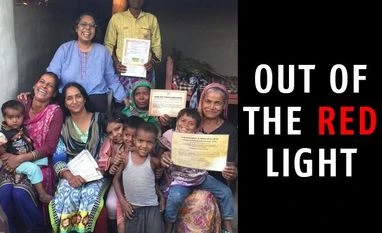
Apne Aap has been working to empower sex workers and their children since 2002
premium
Set up by Ruchira Gupta after her documentary on women in Mumbai’s red light district won an Emmy, Apne Aap illustrates how empowerment of sex workers is a more effective tool than punishment and protection can ever be
In July 2018, when the Lok Sabha passed the Trafficking of Persons (Prevention, Protection and Rehabilitation) Bill, 2018, it refocused the spotlight on India’s sex trade and its links with human trafficking. But unlike more progressive legislations passed in Sweden, Norway and France, among other countries, the Bill neither criminalises the purchase of sex, nor does it decrimanalise the victims. Critics worldwide advocate replacing this punitive approach with a more humane, holistic system which allows sex workers to voluntarily exit their profession and gradually integrate into the mainstream. One of the best examples of this is Apne Aap, a network which has been working to empower sex workers and their children since 2002. Set up by Ruchira Gupta after her documentary on women in Mumbai’s red light district won an Emmy, Apne Aap (AA) illustrates exactly how empowerment of sex workers is a more effective tool than punishment and protection can ever be.
“We encourage sex workers to join our community centres near red light areas in Bihar, West Bengal and Delhi,” says Gupta. “Here, over a period of three to five years, we empower them with ten assets.” These assets — safe space, education, self-confidence, political power, government-authorised IDs, access to government subsidies, health care, legal support, bank accounts, livelihood linkages and a network of at least nine friends — enable them to take their first baby steps towards lives of freedom and dignity.
Here are some of the success stories: A sex worker from a denotified tribe enrolled with AA along with her daughter. It was customary in her tribe for the husband to pimp his wife out after the birth of their first child. When her daughter came of age, the family sought to marry her off too. The daughter challenged this practice and, emboldened by her, her mother also spoke against it in the village panchayat. “They convinced the panchayat to eschew this regressive practice,” Gupta says proudly. In Forbesganj, Bihar, where AA has been active for over 12 years, there used to be dozens of brothels. Now only three remain, with 77 traffickers in jail. The reason? AA’s network has trained women how to file police complaints and give evidence against their traffickers. Some women here have started dance bars but have put up signs outside their doors saying that they don’t engage in sex work. In Delhi and Kolkata, AA gets children living in brothels admitted to local boarding schools. “While in the brothel, these children are acutely vulnerable to exploitation,” says Gupta. “But most blossom in school!” And they’ve found that once these children (AA has educated over 1,000 at last count) get jobs, they pull their mothers out of sex work. “Often when people come to our centres they’re disappointed at not seeing any quick-fix success stories!” she says. “But we’ve realised empowerment is a slow, slow process that sometimes takes a generation to show results.”
The Bright Side
AA has been active in Forbesganj, Bihar, for 12 years, reducing dozens of operative brothels to three
With centres in Delhi, West Bengal and Bihar, AA is a remarkably lean organisation with barely 41 staffers and an annual budget of Rs34 million. This owes largely to their peer-to-peer support model. “Unlike the shelter home approach, we don’t handhold every victim of sex trafficking,” says Gupta. Instead, AA members reach out to other women trapped in prostitution and organise self-empowerment programme. The AA network has over 24,000 members today, all inching slowly but determinedly towards dignity.
Next on Gupta’s agenda is the global campaign, Girls for the Last Girl. “I think of the last girl as a thirteen-year-old in a brothel, invisible and the most vulnerable,” says Gupta. AA is developing clubs in high schools across the globe to raise awareness and funds in support of that teenager in a brothel, or at the risk of being sold to one. The idea, once again, is to identify teenagers at risk and enable them to live dignified and secure lives. As an approach, this is poles apart from the harsher, more punitive one proposed in the Trafficking of Persons (Prevention, Protection and Rehabilitation) Bill, 2018. “In most cases, building the victim’s self-esteem and developing a safe network for her to grow in, works better than placing her in a protective home,” says Gupta. “For only when you do that, do you give her the skills to rebuild her own life…”
To learn more, visit apneaap.org or follow them on Facebook and Twitter




