
Can't exclude creamy layer of SC/ST from quota in promotions: Govt to SC
Attorney General K K Venugopal said that even if some people of the community have come up, the stigma of caste and backwardness is still attached to them
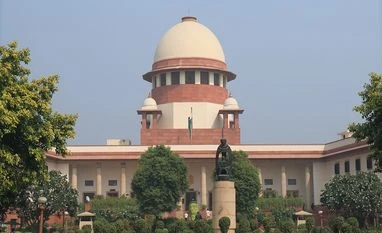 "Can't exclude creamy layer of SC/ST from quota in promotions: Govt to SC")
Explore Business Standard
Attorney General K K Venugopal said that even if some people of the community have come up, the stigma of caste and backwardness is still attached to them
The Centre today told the Supreme Court that the creamy layer concept cannot be applied to deny benefits of quota in promotions to government employees of SC/ST community as the stigma of caste and backwardness is still attached to them.
Attorney General K K Venugopal told a five-judge Constitution bench headed by Chief Justice Dipak Misra that there is no judgment which says that affluent people of the SC/ST community can be denied quota benefits by applying creamy layer concept.
Venugopal was responding to a question whether the creamy layer concept can be applied to exclude persons who have come up to ensure that the backward among the SC/ST communities can reap the benefits of quota.
The top law officer said that even if some people of the community have come up, the stigma of caste and backwardness is still attached to them.
He also said that the question of excluding certain class of SC/ST has to be decided by the President and the Parliament and this exercise is not open to judiciary.
"They have to marry from their own caste. Even a well-off person of SC/ST community cannot marry from a higher caste. The fact that some persons have become affluent does not take away the imprint of caste and backwardness.
The top law officer termed the discriminatory caste system as a misfortune of the country.
Advancing of arguments is still continuing.
The bench, also comprises justices Kurian Joseph, R F Nariman, Sanjay Kishan Kaul and Indu Malhotra.
Earlier on August 3, the apex court had asked the Centre as to why states have not come forward with any quantifiable data to decide the inadequacy of representation of Scheduled Castes and Scheduled Tribes in government services even 12 years after its verdict on the 'creamy layer'.
The five-judge Constitution bench is examining whether its 12-year-old verdict that had dealt with the issue of 'creamy layer' for reservations to SC and ST categories in government job promotions needs to be re-visited by a seven-judge bench.
The apex court had on July 11 refused to pass any interim order against its 2006 verdict and said that a five-judge bench would first see whether it needs to be examined by a seven-judge bench or not.
The M Nagaraj verdict of 2006 had held that the 'creamy layer' concept cannot be applied to the Scheduled Castes and Scheduled Tribes for promotions in government jobs, like two earlier verdicts of 1992 Indra Sawhney and others versus Union of India (popularly called Mandal Commission verdict) and 2005 E V Chinnaiah versus State of Andhra Pradesh which had dealt with creamy layer in Other Backward Classes category.
It had reiterated that the ceiling-limit of 50 per cent, the concept of the creamy layer and the compelling reasons like backwardness, inadequacy of representation and overall administrative efficiency were all constitutional requirements, without which the structure of equality of opportunity in Article 16 would collapse.
First Published: Aug 16 2018 | 1:07 PM IST

