
Centre may clarify in HC if it wishes to withdraw its stand on marital rape
The Centre is likely to inform the Delhi HC whether it wishes to withdraw its earlier affidavit in which it had submitted that marital rape cannot be made a criminal offence
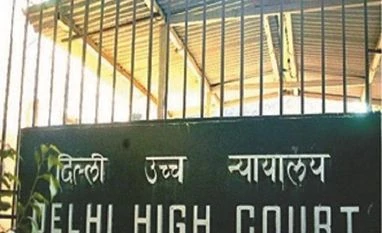 "Centre may clarify in HC if it wishes to withdraw its stand on marital rape")
WebinarsNew
Deep DiveNew
Explore Business Standard
The Centre is likely to inform the Delhi HC whether it wishes to withdraw its earlier affidavit in which it had submitted that marital rape cannot be made a criminal offence
The Centre is likely to inform the Delhi High Court on Monday whether it wishes to withdraw its earlier affidavit in which it had submitted that marital rape cannot be made a criminal offence as it could become a phenomenon which may destabilise the institution of marriage and an easy tool for harassing husbands.
A bench of Justices Rajiv Shakdher and C Hari Shankar, on January 28, had asked the Centre's counsel to take instructions on whether it wants to withdraw its 2017 affidavit.
The bench, which has been conducting marathon hearings on a batch of petitions seeking criminalisation of marital rape, will also hear rejoinder submissions on behalf of petitioners on Monday.
Advocate Karuna Nundy, representing petitioner NGOs RIT Foundation and All India Democratic Women's Association, has sought a clarification as to whether she shall address the written submissions and affidavits filed by the central government so far or they are withdrawing it.
This assumes significance as the Centre, in its affidavit filed in August 2017, had said the Supreme Court and various high courts have already observed the rising misuse of Section 498A (harassment caused to a married woman by her husband and in-laws) of the Indian Penal Code (IPC).
It had further said that marital rape has not been defined in any statue or law and while the offence of rape is defined under section 375 IPC, defining marital rape would call for a broad based consensus of the society.
Regarding the petitioners' submission that other countries, mostly western, have criminalised marital rape, the Centre had said it does not necessarily mean India should also follow them blindly.
"This country has its own unique problems due to various factors like literacy, lack of financial empowerment of the majority of females, mindset of the society, vast diversity, poverty, etc. and these should be considered carefully before criminalising marital rape," it had said.
However, in January, Solicitor General Tushar Mehta told the high court that it was considering a constructive approach to the issue and has sought suggestions from several stakeholders and authorities on comprehensive amendments to the criminal law.
He had said criminalisation of marital rape involves family issues as well as the dignity of a woman and cannot be looked at from a microscopic angle and sought some time to respond with the government's stand.
The bench, on January 24, granted 10 days to the Centre to come back with its stand on the issue.
The court, which has been hearing the pleas on a daily basis since January 10, has concluded hearing the submissions of petitioners, the Delhi government and some NGOs which have been opposing the pleas.
It was hearing PILs filed by NGOs RIT Foundation, All India Democratic Women's Association, a man and a woman seeking striking down of the exception granted to husbands under the Indian rape law.
Under the exception given in Section 375 of the IPC, sexual intercourse or sexual acts by a man with his own wife, the wife not being under 15 years of age, is not rape.
The petitioners had said that marital rape was the biggest form of sexual violence against women and the Delhi government had said that this act was already covered as a "crime of cruelty" under IPC.
The petitioner NGOs have challenged the Constitutionality of section 375 IPC on grounds that it discriminated against married women being sexually assaulted by their husbands.
NGO, Men Welfare Trust (MWT), which is opposing the batch of petitions seeking criminalisation of marital rape, had argued that sexual intercourse between a husband and wife cannot be treated on a par with that in non-marital relationships as the issue of consent cannot be divorced from the context of a marriage.
It had submitted that the Domestic Violence Act was specifically promulgated for recognising spouse sexual violence.
(Only the headline and picture of this report may have been reworked by the Business Standard staff; the rest of the content is auto-generated from a syndicated feed.)
First Published: Jan 30 2022 | 4:01 PM IST


 Connect with us on WhatsApp