5 min read Last Updated : Jan 08 2020 | 10:02 PM IST
The position of Delhi is different from other states and the elected government is under an obligation to apprise the Lieutenant Governor about policy decisions, the Supreme Court said today.
While hearing pleas on who enjoyed supremacy in governing the national capital, a five-judge Constitution bench headed by Chief Justice Dipak Misra referred to provisions of the Constitution, the Government of National Capital Territory of Delhi Act and the Transaction of Business of the Government of National Capital Territory of Delhi Rules and said there was "some kind of wall" which distinguished Delhi from others.
"Unlike other states, if you (Delhi government) take a policy decision, then you have to intimate the Lieutenant Governor (LG). You are bound to intimate the LG, but you cannot say that the LG has to concur. This is the range," the bench, also comprising Justices A K Sikri, A M Khanwilkar, D Y Chandrachud and Ashok Bhushan, said.
On the issue of concurrence, the top court said there was no need for "fundamental concurrence" of LG in every aspect and there should be "real good reason" in case of difference of opinion over the decision of the government.
It said a balance needed to be maintained between the powers of the LG and the Chief Minister and the council of ministers. Every file is not required to be placed before the LG, but only those which are mentioned in the Transaction of Business rules.
The bench, during the day-long hearing, also referred to provision 23 of the Transaction of Business rules and said in certain cases like in matters of peace and tranquility of the capital, the issue "shall essentially be submitted to the LG through the Chief Secretary and the Chief Minister before issuing any orders thereon".
Senior advocate Gopal Subramanium, arguing for AAP government, said "as a responsible government, we cannot contest it".
He, however, said the constitutional schemes be given the widest interpretation and they cannot be interpreted to defeat what is intrinsic to the Preamble.
On the issue of mandatory "aid and advice" of the council of ministers to the LG, the senior lawyer said it was "not a permission to interfere".
Referring to Article 239AA which deals with Delhi, he said supremacy of Parliament on law-making was not being questioned, but theory of separation of powers was also a key to participatory democracy, which has to be considered.
The court said in case of difference of opinion with regard to a law made by Delhi assembly, the LG has the power to refer it to the President for a decision and sub-article 4 of Article 239AA provides that pending decision, the LG can pass an interim order if necessary.
The counsel for Delhi government said the elected government has powers to undertake executive functions.
"It is not permissible that the Lieutenant Governor use residuary powers to take primacy and, moreover, the overriding powers cannot be vested with the LG," Subramanium said.
As far as legislative powers of Delhi are concerned there was no issue with regard to supremacy of Parliament which can make laws on subjects specified in state and the concurrent list of the Constitution, the bench said.
Subramanium alleged that the LG demands files and issues directive to all officers to follow his instructions, rather than those of the elected Chief Minister.
"Then what is the purpose of having a CM? You can't have two executive dice for ruling one state," he said.
The bench observed that constitutional provisions suggest that the LG has power in all such subjects which are not in the purview of state legislature.
"There cannot be problem with this but there cannot be a scheme of things to circumvent everything. Proviso provides for harmonisation of powers to enable governance by democratically elected government," Subramanium said.
He said the LG calls for files and overrides decisions of the government without informing the minister of the concerned department. "There is need to act in harmony not to circumvent the decision of government," he added.
To this, the bench said it was never contemplated by the Constitution makers that one man's concurrence was needed for every aspect though over-riding powers were given to LG.
Subramnium asked in matters relating purely to welfare measures like opening of primary health centres or a school or a night shelter, does the government need the LG's concurrence.
"IAS-IPS officers are from All India Services. Does that mean they won't listen to the CM and council of ministers," he said, adding transfer orders are passed by LG.
"Cabinet does not need concurrence of LG every time. Power to call for any file by LG is residuary and needs to be exercised in exceptional cases," he said.
He cited the 2001 Parliament attack case and said if the action of Delhi government endangered an institution of national importance, then in such case the LG can take a call.
The arguments remained inconclusive and the senior advocate will resume them tomorrow.

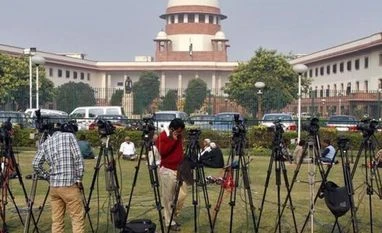 "Delhi is different from other states, govt obliged to apprise LG, says SC")

