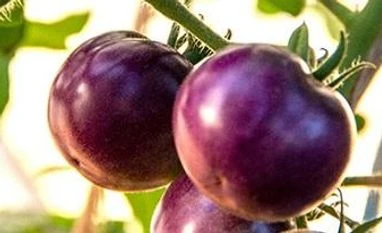
Ever had a purple tomato? USDA approves GM crop variety for cultivation

With the approval, the crop is free from regulations and may be grown freely across the USA. However, the fruit will have to go through more scrutiny before being sold in the markets

Photo: USDA
Photo: USDA
BS Web Team New Delhi
2 min read Last Updated : Sep 14 2022 | 9:20 AM IST
After over 14 years of development of the purple tomato, the genetically modified (GM) crop has been recognised as safe to grow by the United States Department of Agriculture (USDA). The seeds of the plant developed by Norfolk Plant Sciences (NPS) may enter the market for sale by 2023.

The purple tomato produces a higher amount of antioxidants called anthocyanins. "The anthocyanin content of purple fruits from a hemizygous Del/Ros1 plant averaged approximately 500 mg per 100 g fresh weight whereas anthocyanins were undetectable in wild type red tomatoes", the company's filing with the USDA read.

Anthocyanins are found in several foods and are responsible for their purple colour. These include blueberries and red cabbage. The antioxidant helps lower the risk of diabetes and heart disease, according to a report by crast.net.


The USDA released a statement, "We found the plant is unlikely to pose an increased plant pest risk compared to other cultivated tomatoes and is not subject to regulation under 7 CFR part 340. That means, from a plant pest risk perspective, this plant may be safely grown and used in breeding in the United States."

"With respect to Norfolk Plant Sciences' purple tomato, we did not identify any plausible pathways to increased plant pest risk compared to other cultivated tomatoes and issued a response letter indicating the plant is not subject to regulation," it added.

With the approval, the crop is free from regulations and may be grown freely across the USA. However, the fruit will have to go through more scrutiny before being sold in the markets. The first step in this would be the sale of the seed of the plant in the open market and recording the response of the home growers.

"It's a red-letter day for crop improvement," Jonathan Jones, co-founder of NPS, told crast.net.

One subscription. Two world-class reads.

Already subscribed? Log in

Subscribe to read the full story →
*Subscribe to Business Standard digital and get complimentary access to The New York Times

Smart Quarterly

₹900

3 Months

₹300/Month

SAVE 25%

Smart Essential

₹2,700

1 Year

₹225/Month

SAVE 46%
*Complimentary New York Times access for the 2nd year will be given after 12 months

Super Saver

₹3,900

2 Years

₹162/Month

Subscribe

Renews automatically, cancel anytime

Here’s what’s included in our digital subscription plans

Exclusive premium stories online

  • Over 30 premium stories daily, handpicked by our editors

Complimentary Access to The New York Times

  • News, Games, Cooking, Audio, Wirecutter & The Athletic

Business Standard Epaper

  • Digital replica of our daily newspaper — with options to read, save, and share

Curated Newsletters

  • Insights on markets, finance, politics, tech, and more delivered to your inbox

Market Analysis & Investment Insights

  • In-depth market analysis & insights with access to The Smart Investor

Archives

  • Repository of articles and publications dating back to 1997

Ad-free Reading

  • Uninterrupted reading experience with no advertisements

Seamless Access Across All Devices

  • Access Business Standard across devices — mobile, tablet, or PC, via web or app

Topics :GM cropsTomatoesUSDAUnited StatesVegetablesAntioxidantsBS Web Reports

Next Story




