3 min read Last Updated : Mar 10 2022 | 6:02 AM IST
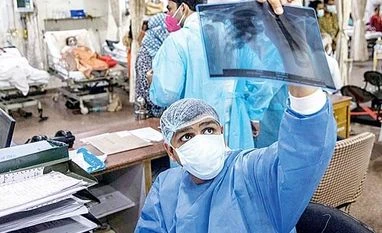
As the Covid situation eases, hospital admissions under the Ayushman Bharat Pradhan Mantri Jan Arogya Yojana (PM-JAY) have nearly doubled in the last six months to 1.5 million per month from pre-Covid levels of around 800,000 a month.
“This number may not be sustainable but it shows that all the pent-up demand (for non-Covid treatment or elective procedures) is coming to the fore, so we are seeing a sudden surge in numbers,” said R S Sharma, CEO, National Health Authority (NHA).
With things returning to normal, the government has elaborate plans for the Ayushman Bharat scheme such as better identification of those entitled to it, increasing coverage, and persuading more hospitals to enlist.
Identifying beneficiaries has been one of the biggest challenges of the scheme. Inclusion in the Socio Economic and Caste Census 2011 makes one automatically eligible for PM-JAY but limited data has been a difficulty.
The NHA will start an “Ayushman Aapke Dwar” (Ayushman at your doorstep) campaign later this week to create awareness and actively reach out to those who are entitled to the scheme but may not know about it.
“It is our top priority. We are giving free Ayushman cards,” said Sharma.
Since January 2021, 45 million Ayushman cards have been handed out — a jump of over 50 per cent since the scheme’s inception in September 2018. Overall, PM-JAY has seen 30 million hospital admissions worth over Rs 35,000 crore.
“If the beneficiaries had availed of these services through open market channels, it would have cost them 1.5 to two times more,” said Sharma.
The NHA, which oversees the Central Government Health Scheme (CGHS), has asked CGHS-empanelled hospitals to come on board Ayushman Bharat. Currently, there are some 25,000 hospitals under Ayushman Bharat. Of these, 40 per cent are private and account for about 66 per cent of authorised hospital admissions by value. The number of government hospitals empanelled is higher since they are automatically part of Ayushman.
Last year, Ayushman Bharat’s rates for each kind of treatment were overhauled along with the number of health packages, but the plan is to further fine-tune the policy by offering diagnosis-related groups treatment.
This means that instead of creating a fixed package for a disease, it would be customised according to the severity of the disease and length of treatment to provide better financial support to patients.
Sharma said the effort is to make the rates more market-linked and also reduce the turnaround time of payment to 15 days. In FY23, the target is to bring this time down to a week.
While private hospitals have grumbled about payment delays, the reverse problem is seen in government hospitals where several do not raise any claims at all on the grounds that their treatment is free in any case.
The challenge has been to push the uptake of Ayushman Bharat in government hospitals and ensure they are able to utilise the funds reimbursed for upgrading their infrastructure.
The e-RUPI facility will also be made available to beneficiaries for diagnostic treatment. Currently, it is part of the hospital cost. e-RUPI will be shared with the beneficiaries for specific services through SMS or QR code.
A dashboard to provide the status of claims and admissions is also in the works on the lines of the CoWIN platform to bring transparency to the scheme.