Beijing's courting of Sangh Parivar
China has been at it since Modi came to power
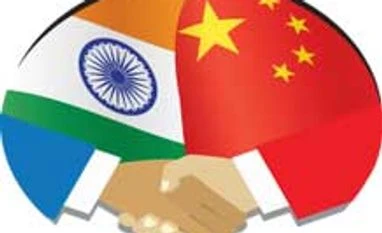
Archis Mohan New Delhi Beijing has subjected the Sangh Parivar to some sumptuous soft diplomacy since the Narendra Modi government took over last May.
The result of this vigorous engagement between the godless mandarins of the Communist Party of China (CPC) and the god-fearing apparatchiks of the Parivar affiliates has been a renewed push to study India-China relations in the context of their 2,500-year civilisational links, rather than from the vestiges of the colonial period or the Cold War dynamics or even the prism of the 1962 India-China war.
According to Parivar sources, Beijing, in the past year, has hosted at least 70 delegations from India as part of its outreach to the Indian business community, youth leaders and Sangh Parivar affiliates. Participants in several of these delegations were either Parivar nominees or those sympathetic to the Sangh’s nationalistic perspective on India-China relations.
There were also several delegations comprising exclusively Bharatiya Janata Party or Parivar seniors which have visited China since June 2014. Party general secretary Ram Madhav and secretary Siddharth Nath Singh were two important names. Madhav led a delegation that also visited the school the CPC runs for its cadres.
All who returned seemed appreciative of China’s efforts to look at India-China relations from their civilisational links, and urged people here to move beyond looking at bilateral relations from “an American point of view”. They also stressed how little educated Indians knew about China.
“During my visit, I was surprised to find that common Chinese were not only aware of the Buddha and Dr (Dwarkanath) Kotnis but also Rabindranath Tagore and Atal Behari Vajpayee. It would be rare to find a common Indian who knows about Mao Zedong, let alone Deng Xiaoping,” said Praful Ketkar, editor of the Rashtriya Swayamsevak Sangh weekly, Organiser, who had visited China in 2012.
The engagement has helped Sangh leaders, who in 1998 had supported George Fernandes, defence minister in the then Vajpayee government, when he said China was a bigger threat to India than Pakistan, to recognise the many Chinese travellers who visited ancient India and whose works are some of the only historical texts that describe India’s then religious and social customs.
The Parivar has encouraged Prime Minister Narendra Modi to tell the Chinese that Indians would want to be play a more active role in Beijing’s new ‘silk route’ plan. And, that India could be a better and less expensive destination than Hong Kong for those in China needing good medical services. The two countries are also likely to sign an agreement where Indian teachers will impart English language skills to Chinese students.
The RSS, however, is cautious about any resolution to the vexed boundary dispute in the short term. It believes the Modi visit to be a golden opportunity for both countries to work on fostering a public opinion that could help resolve the dispute in our lifetimes.

 "Beijing's courting of Sangh Parivar")


 Connect with us on WhatsApp