In 3 mths of resumption, Delhi Metro clocks 22% of 6-mn avg daily footfall

On November 30, as many as 1.3-million riders travelled via the mass rapid transit network
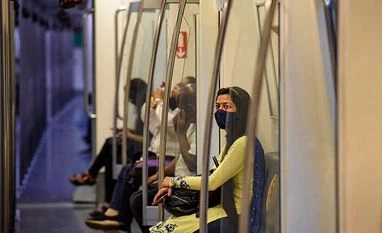
Delhi metro
Delhi Metro services resumed as part of the Union government's Unlock 4.0 guidelines. Photo: PTI
Megha Manchanda New Delhi
3 min read Last Updated : Dec 06 2020 | 11:43 PM IST
Nearly three months after it was opened to public after a five-month hiatus, Delhi Metro has managed to reach nearly a quarter of its pre-Covid daily footfall of 6 million.

On November 30, as many as 1.3-million riders travelled via the mass rapid transit network.

This may be a sign of significant improvement from the date of resumption of services, but it is just 22 per cent of the 6-million average daily ridership of Delhi Metro before the lockdown restrictions were imposed in March this year.

While the ridership has seen consistent increase since the services resumed on September 7, it is yet to touch the average daily ridership of the pre-Covid era.

Delhi Metro services resumed as part of the Union government's Unlock 4.0 guidelines.

The resumption started with the graded opening of some Metro lines. Other lines were made operational in phases before the entire network of 400 km was thrown open on September 12.

Many shifted to the Metro for their daily commute since they were either relying on bus service or ride-hailing aggregators, besides private modes of transportation.

The first few hours of the service resumption saw barely 8,300 passengers. But within a week of restarting operations, the ridership went up to 249,884.

 
According to the official Delhi Metro Rail Corporation (DMRC) data, as many as 619,242 passengers took the Metro daily in the month of September. The average daily ridership touched 1.22 million in October and jumped further to 1.33 million in November.

Besides Delhi Metro, other privately run Metro networks also started functioning from September 7. 


Hyderabad Metro started with 19,000 passengers on the first day and increased gradually to 31,000 on Day 3. Its Monday ridership was 45,000, informed sources.

The DMRC had incurred losses to the tune of ~1,690 crore during the 169-day period it was closed, thereby forcing it to resort to stringent cost-cutting measures, including freezing staff allowances.

Besides train tickets, the corporation also earns its revenue from advertising and rentals from the retail outlets at its tations. Both these streams of revenue had dried up during the period it was shut.

The DMRC had halted services on March 22 amid fears of the spread of the novel coronavirus. During the shutdown, it had notched up a revenue loss of ~10 crore per day on average.

Moreover, the DMRC had also received loans from the Japan International Cooperation Agency (JICA). Although the DMRC is responsible for repayment of loan, it had been taken from JICA by the central government, whom the DMRC repays.

One subscription. Two world-class reads.

Already subscribed? Log in

Subscribe to read the full story →
*Subscribe to Business Standard digital and get complimentary access to The New York Times

Smart Quarterly

₹900

3 Months

₹300/Month

SAVE 25%

Smart Essential

₹2,700

1 Year

₹225/Month

SAVE 46%
*Complimentary New York Times access for the 2nd year will be given after 12 months

Super Saver

₹3,900

2 Years

₹162/Month

Subscribe

Renews automatically, cancel anytime

Here’s what’s included in our digital subscription plans

Exclusive premium stories online

  • Over 30 premium stories daily, handpicked by our editors

Complimentary Access to The New York Times

  • News, Games, Cooking, Audio, Wirecutter & The Athletic

Business Standard Epaper

  • Digital replica of our daily newspaper — with options to read, save, and share

Curated Newsletters

  • Insights on markets, finance, politics, tech, and more delivered to your inbox

Market Analysis & Investment Insights

  • In-depth market analysis & insights with access to The Smart Investor

Archives

  • Repository of articles and publications dating back to 1997

Ad-free Reading

  • Uninterrupted reading experience with no advertisements

Seamless Access Across All Devices

  • Access Business Standard across devices — mobile, tablet, or PC, via web or app

Topics :CoronavirusDelhi MetroMetro RailDMRCHyderabad metro

Next Story


