Irrigation scheme's targets unlikely to be met
Modi's flagship programme faces an uphill task of total irrigation
Sanjeeb Mukherjee New Delhi One of the major pre-poll promises of the Narendra Modi government has been his idea of 'per drop more crop', which, in other words, means an extensive network of canals and irrigation facilities for farming.
Pradhan Mantri Sinchaee Yojana, initially under the ministry of water resources, got transferred to the department of agriculture and its nomenclature was changed to the Pradhan Mantri Gram Sinchaee Yojana.
Acloser look at the programme and its initial blue-print suggests that it borrows heavily from the existing Accelerated Irrigation Benefit Programme (AIBP). To kick-start it, Finance Minister Arun Jaitley allocated about Rs 5,300 crore for the programme in the Union Budget 2015-16, while in the previous year Rs 1,000 was allocated.
Data from the ministry of water resources show that an amount of around Rs 6,300 crore is needed to complete all the existing minor irrigation projects as on March 31, 2015. This effectively means that the funds allocated so far will essentially be spent on completing the existing irrigation projects.
Though many experts said this programme is a rip off of AIBP, officials in the department of agriculture said a critical difference is that funds under the same would be transferred to the district authorities, who then would prepare plans to link canals and river streams.
As per official data, till 2011-12, around 46.34 per cent of India's net sown area of around 140.80 million hectares was under irrigation.
In 2000-01, around 40.5 per cent of net sown area was under irrigation, a rise of around 5.8 percentage points in a decade. This effectively means that of vast tracts, more than half were entirely rain dependent. In crops such as oilseeds, pulses and coarse cereals, data show that of the total area under cultivation only 26 per cent, 16.2 per cent and 14.4 per cent, respectively, is under irrigation.
In foodgrain such as wheat and rice, it is slightly better and of the total area under cultivation around 48 per cent is irrigated. To achieve the target of total irrigation, a massive fund infusion would be needed; something which some experts said could be in excess of Rs 50,000 crore.
The Centre as some officials said could look at the Gujarat model of irrigation, wherein a network of social workers and NGOs were involved to push the programme at ground level.
In Gujarat, as per state government figures, the area under irrigation rose from 3.3 million hectares in 2000-01 to almost 5.3 million hectares in 2012-13 of which over 200,000 hectares was under micro-irrigation.
Given the tardy progress in bringing sown area under irrigation so far; pushing the total irrigated area to even half of the area in five years will need a momentous effort.

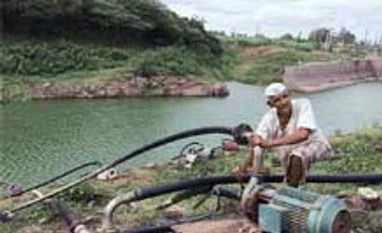 "Irrigation scheme's targets unlikely to be met")


 Connect with us on WhatsApp