Does rabi sowing has any impact on jobs sought under MNREGA or the fall seen this year has been on account of demonetization?
If numbers provided MNREGA portal are to be believed, a fall in jobs provided during the rabi sowing months of October and November is nothing unusual and has been happening since long, but if the number on persondays of work projected at the start of year compared to persondays of work actually provided is any indicator then it does show towards a steady decline from August onwards.
This as many believe could have been because of fund squeeze, some informal communication to states to lower job demand. However, the squeeze has been happening since September and reached its peak in November, when just 41 per cent of the budgeted person days of work under MNREGA was actually provided.
The total households who have been provided jobs under MNREGA has always shown a dip in November which starts around September and 2016 was no different.
November is considered the best month for sowing of rabi crops as the winter starts setting in and the residual moisture in soil is still available, lowering farmers reliance on ground water.
This is also the time, when farm labour is engaged in the fields and there is a dip in the demand for work under MGNREGA. Therefore, the slump in work provided under MNREGA in November is nothing unusual.
In fact, in 2015, which was a drought year, the number of households provided jobs under MGNREGA, fell from 12.31 million in September, to 12.16 million in October. The numbers further declined next month to settle at to 11.58 million in November.
During 2014-15 too, the number of households provided jobs under the scheme fell from 7.30 million in September to 6.14 million in October, before it rose just marginally in November to 6.41 million.
Jobs provided under MNREGA again dropped from 9.97 million households in September to 8.54 million in November during the 2012-13 UPA regime.
This year, the fall in the number of MGNREGA jobs had started even before the Centre's demonetisation policy that was announced on November 8.
Data from the ministry of rural development shows that during the July-August period this year, the number of households provided jobs dropped by 19 per cent, while between September to October, when there was no sign of demonetisation, they fell by 22.30 per cent, followed by a 22 per cent drop between October to November.
In 2015-16, financial year, a similar trend was seen and barring a 3.53 per cent increase in September, there has been consistentdecline in the number of jobs provided under the scheme.
Therefore, jobs provided in November are usually low as most farm labourers are engaged in agriculture and allied activities.
What should be worrying the government is the reason behind the declining demand of work under MGNREGA. According to a senior official, a study has ben commissioned to understand why the demand dropped this year.
This also includes the rabi sowing months of October and November and those before the demonetisation policy was announced.
Officials said in September 2016, that is before demonetization kicked in around 11.15 million households across the country sought jobs under MNREGA, while during the same month last year around 13.65 million households had lined up demanding work.
Similarly, in October after the monsoon 7.93 million households lined up for jobs, while during the same month in 2015, this number was 13.53 million, a fall of around 42 per cent.
In November 2016, data showed that 7.53 million households sought work, which was 44.5 per cent less than the same month last year.
One big reason for this drop and which is somewhat believable is that 2015 was a drought year and naturally demand for work would have been higher because demand for work in 2013-14 and 2012-13 was around 8-11 million households in September, October and November, which were somewhat normal years.
There have also been questions and allegations of Centre selectively lowering jobs demand to cut down on its expenditure.
But, senior officials said that the fall in households demanding work under MNREGS in 2016 could mean that farm labourers got work in fields due to good monsoon.
The other aspect, which the study is expected to find out is whether there has been any rise in non-farm activities in rural areas which has lead to a drop in demand for work under MNREGS.
Households demanding work and work generated in millions in November
| Year | Work demanded | Work generated |
| 2016 | 7.54 | 5.24 |
| 2015 | 13.57 | 11.58 |
| 2014 | 7.56 | 6.41 |

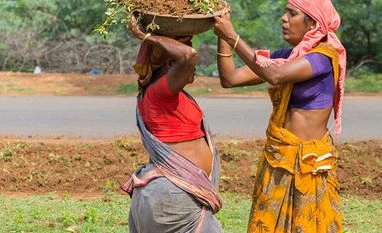 "It's rabi sowing, not cash crunch: What slowed demand for work under MNREGA")


 Connect with us on WhatsApp