
Naidu asks TN govt to remove encroachments on a war footing
State asks for special package and grants to develop infrastructure post heavy rainfall and floods
 "Naidu asks TN govt to remove encroachments on a war footing")
WebinarsNew
Deep DiveNew
Explore Business Standard
State asks for special package and grants to develop infrastructure post heavy rainfall and floods
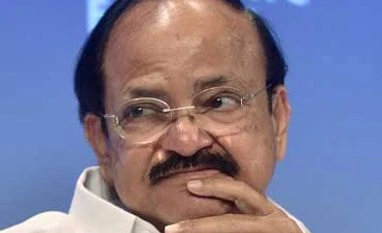
After meeting Tamil Nadu Chief Minister J Jayalalaithaa today in Chennai, Naidu said: "It is a major issue and the encroachments should be removed on a war footing."
Both leaders discussed about the recent rain and floods in Tamil Nadu, especially in Chennai, Kanchipuram, Tiruvallur and Cuddalore districts.
"I have seen on social media that institutions and private people have also made encroachments. This cannot be allowed, because it will cause large suffering. It is a lesson for the entire country. Experts say there is a possibility for such occurrences in the future also not only in Tamil Nadu, but also in Andhra Pradesh and Karnataka," he told reporters.
"As an urban development minister, I will be pursing with all the states on removal of such encroachments and obstructions to rivers, lakes and riverbeds," said Naidu.
State demands special package
During the meeting, the chief minister said that the rainfall in Chennai last month was 101.8 cm, which is the second highest rainfall recorded since November 1918.
These urban local bodies including Chennai Corporation would require substantial assistance to restore the systems damaged due to the floods. Preliminary estimates of the requirement exceed Rs 4,500 crore, said the chief minister.
While Centre's assistance would be at the rate of Rs 1.5 lakh per house, the state would contribute Rs 1 lakh per house, making a total grant of Rs 2.5 lakh.
A special project to construct alternative housing for the families, living near the three banks and canals, has been prepared for which funding of Rs 5,000 crore, said Jayalalithaa.
The chief minister also requested the Ministry of Housing and Urban Poverty Alleviation to provide financial assistance. The chief minister specifically drew attention to the plight of slum dwellers residing along the city's water ways, Adayar, Cooum and Buckingham Canal, who have lost their homes and all their belongings in the floods.
The chief minister emphasised that rehabilitating the slum dwellers residing along the Chennai waterways is the highest priority for the state government.
First Published: Dec 13 2015 | 5:04 PM IST


 Connect with us on WhatsApp