In 2012, the Indian Navy became the first non-US military to field the Boeing P-8 Poseidon, paying $2.1 billion for eight of these cutting-edge multi-mission maritime aircraft that patrol vast stretches of ocean to detect and destroy enemy submarines and warships.
Yet, India has lost the advantage of being first-mover. Australia’s new P-8 aircraft, which arrived in that country last Wednesday, is significantly more capable than the Indian version. So too will be the British version of the P-8.
The reason: poor contracting by New Delhi. The Australian and British contracts with Boeing provide for automatic upgrade of their P-8s, in tandem with each new upgrade of the US Navy P-8s, a process that continues round the year, through the aircraft’s service life. India’s contract for the P-8I has no such provision.
Australia’s and the UK’s automatic upgrades are embedded in what is termed a “spiral upgrade programme”. Without the upgrades this provides for, India’s P-8Is are steadily lagging behind the technology curve.
A follow-on Indian contract signed in July 2016 for four more P-8I aircraft, which are to be delivered by 2020, will belatedly make up some of this technology lag. Mark Jordan, chief engineer of the P-8 project, said in Seattle last Monday that the Indian Navy had provided “a long list of upgrades” for the new aircraft. Some of those upgrades would also be fitted retrospectively into the first eight P-8Is.
But subsequent upgrades and improvements would not be passed automatically to India’s P-8Is, while Australia and the UK will continue to benefit.
With no contractual provision for even informing India about new upgrades developed by the American vendors, the navy would only learn about upgrades from open sources, such as the internet, and information shared during joint exercises.
From the start, the navy’s P-8Is were handicapped by Delhi’s refusal to sign up for an Indo-US communications security agreement called the “Communications and Information Security Memorandum of Agreement” (CISMOA). Without this the US cannot legally part with any “CISMOA-controlled equipment”.
Instead, the navy opted for commercially available equipment that does not permit such secure networking.
Of all the weaponry that India has contracted from the US in the last decade --- including C-130J Special Operations transporters, C-17 Globemaster III heavy lift transporter, P-8Is, CH-47F Chinook heavy lift helicopter and AH-64E Apache attack helicopter --- the P-8I has arguably contributed the most towards strengthening India’s defence.
With naval pilots flying long, eight-to-ten hour surveillance missions in the Bay of Bengal, Arabian Sea and Indian Ocean, India knows exactly what is happening in these waters. To deal with enemy warships and submarines the P-8I detects, it has seven tonnes of weaponry on board, including the Harpoon missile and heavyweight torpedoes.
Even so, there may be a cost to keeping the P-8I fleet lagging in technology.
The root of the problem is New Delhi’s out-dated approach to buying weaponry, which acquires equipment separately from upgrades. Currently, several Indian platforms are undergoing exorbitantly expensive “upgrade” programmes that cost several times more than the original purchase. These include Kilo-class submarines; and the Mirage 2000 and MiG-29 fighters.
In contrast, buyers like Australia and the UK incorporate continuous upgrade programmes into the procurement contract, keeping the equipment current rather than paying for “upgrading” several decades down the line. This involves sharing the cost of upgrade development with the vendors. In return real-time upgrades translate into a continuous technology edge.
For example, Australia’s 24 F/A-18 Super Hornets, which began delivery in 2010, have been kept at the same cutting edge as the US Navy’s Super Hornets through a “spiral upgrade programme” included in the contract.
The P-8I, which is engineered on a Boeing 737-800/900 airliner, is built to cater for continuous upgrades through its service life. Boeing engineers point to its 60 per cent power reserve, 25 per cent cooling reserve and 200 cubic feet of unutilised space. Its software has “advanced modular architecture that allows for quick expansion and affordable growth of capabilities.”
Says Jordan: “As threats evolve, you can modify and upgrade the mission systems and stay in front of the threat for a very long time.”

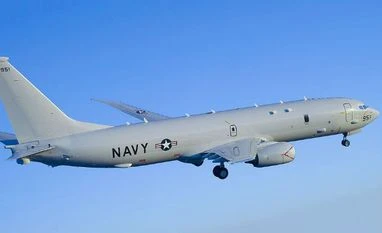 "Navy's P-8I maritime aircraft losing technology race due to poor contracting")


 Connect with us on WhatsApp