Newsmaker: Alur Seelin Kiran Kumar
Indian space mission's silent partner
T E Narasimhan "From a Man of Steel to Man of Mission," is how the Indian Space Research Organisation, or Isro, describes the change in leadership on social media. That may indeed be true. If you Google Alur Seelin Kiran Kumar, the new chairman of the space organisation, you won't find much, except for a long list of projects that he has worked on.
The 62-year-old director of Ahmedabad-based Space Application Centre, who took over as Chairman of Isro from K Radhakrishnan on January 14, has been the silent but potent force behind some of the country's most successful space projects, including the Chandrayaan-1 and Mangalyaan missions. Besides being credited with developing key components for both these projects, he has also played a crucial role in designing the ears and eyes, or the sensors, for the country's first remote sensing satellite, Bhaskara-1, launched in 1979.
"He is a man of few words and a lot of action," say Isro officials. Born in Karnataka's Hassan district in 1952, Kumar joined Isro after graduating in physics from Bangalore University in 1975. Subsequently, he obtained a master's degree in electronics from Bangalore University and an M. Tech in physical engineering from the Indian Institute of Science.
Now among the senior-most scientists serving Isro, Kumar's most noteworthy contribution has been in the field of electro-optical imaging camera systems for earth observation satellites, which are similar to spy satellites but are used for non-military uses such as map-making, environmental monitoring and so on. His extensive work in the field has brought India to the forefront in remote-sensing technology globally. He was also the man behind the terrain-mapping and hyper-spectral cameras, which are used for identifying materials and finding products, for Chandrayaan-1. The lion's share of the images for Isro's lunar atlas has come from the two cameras developed by him.
"His in-depth understanding of spacecraft technology is phenomenal. This is well-proven through his glorious track record as one of the most outstanding scientists Isro has ever produced," says an Isro official.
Colleagues describe him as affable, modest and hard-working whose chosen area of research is in the field of satellite payload. As director of Space Applications Centre, he had been steering the design and development of payloads for earth observation, communication, navigation, space science and planetary exploration. In this role, he spearheaded the design and development of several breakthrough products, including the space-borne synthetic aperture radar (it gathers radar images for study of geology, ecology, hydrology and oceanography) for India's first microwave imaging satellite, RISAT-1. The Mars orbiter, for which Kumar as chief of Spacecraft Authorisation Board was responsible for guiding the entire mission, too has his imprint in the form of thermal infrared imaging spectrometer and methane sensor.
His contribution to India's space programme has won him many honours, including the country's fourth highest civilian award, the Padma Shri, in 2014, the Indian Society of Remote Sensing Award and the Bhaskara Award by Indian Society of Remote Sensing. As the head of Isro, his two most pressing tasks are making India self-reliant in satellite transponder and developing launch capabilities for communication satellites. It seems a lot more work is still to come out of him.

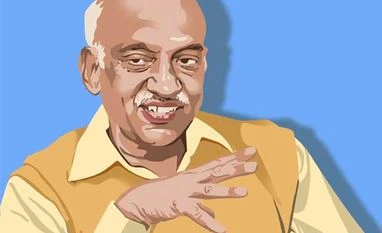 "<b>Newsmaker:</b> Alur Seelin Kiran Kumar")


 Connect with us on WhatsApp