The government’s cautious approach owed to a number of reasons. Growth accelerated in the first two years of the government’s tenure, creating the impression that the problem would solve itself. It also provoked the question of ‘how serious can the problem be if growth is so good?’ Moreover, being in fiscal consolidation mode, the government felt it did not have the resources to fill the gap that would have been left in the banks if the problem of the NPAs had been fully recognized and tackled. That made it difficult to go for solutions that are more serious.
Perhaps the deeper caution of the government in grasping the nettle of the TBS could be attributed to the zeitgeist of stigmatized capitalism. The accusation of ‘suit-boot ki sarkar', the perceived differential treatment of indebted fat cats (corporates) versus debt-burdened poor farmers, and the fear that decisions by public-sector bank managers would be the object of investigation … made the writing down or writing off of loans— absolutely vital to any solution—virtually impossible. … To a certain extent, this situation occurred because a series of RBI initiatives allowed a form of ‘extend and pretend’, postponing repayments to a day of reckoning far in the future. It was only in 2015, two years into Raghuram Rajan’s tenure, that the RBI started pushing banks to come clean on the magnitude of the problem, under its AQR….

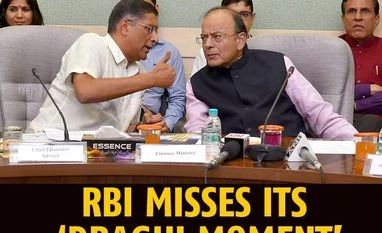 "'Of Counsel': Arvind Subramanian on how RBI missed 'Draghi moment'")









