
Over 20 mn kids in India facing extremely high water vulnerability: UNICEF
More than two crore children in India are experiencing extremely high water vulnerability, according to an analysis by UNICEF
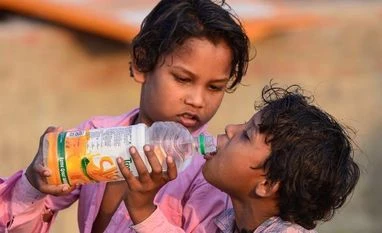 "Over 20 mn kids in India facing extremely high water vulnerability: UNICEF")
WebinarsNew
Deep DiveNew
Explore Business Standard
More than two crore children in India are experiencing extremely high water vulnerability, according to an analysis by UNICEF
More than two crore children in India are experiencing extremely high water vulnerability, according to an analysis by UNICEF.
Extreme water vulnerability is the combination of the highest levels of physical water scarcity risks and lowest levels of drinking water service that affects a given population (surface water, unimproved or limited water service), it said.
The analysis, part of the water security for all initiative, identifies areas where physical water scarcity risks overlap with poor water service levels.
The communities living in these areas depend on surface water, unimproved sources, or water which can take more than 30 minutes to collect.
Of the 111,891,688 children facing water vulnerability, 20,478,554 are experiencing extremely high water vulnerability and 91,413,134 facing high water vulnerability, the study said.
UNICEF India Representative, Yasmin Ali Haque, said water scarcity makes everyday life very difficult for affected families, especially women and children and it exposes children to waterborne diseases and prevents them from adopting safe hygiene practices such as hand washing with soap.
"Women and girls are the most often burdened with fetching water long distances, which disrupts their education and opportunity for any work. This is exacerbated by the fact that India is particularly vulnerable to climate change, which exposes women and children to increasing environmental hazards.
"The COVID-19 pandemic has underscored the crucial need to establish an access to clean water and sanitation, particularly for those living in the most vulnerable, water scarce conditions," she said.
Globally, over 1.42 billion people, including 450 million children, live in areas of high, or extremely high, water vulnerability which means that 1 in 5 children worldwide does not have enough water to meet their everyday needs.
The data shows that children in more than 80 countries live in areas with high or extremely high water vulnerability.
Eastern and Southern Africa has the highest proportion of children living in such areas, with over half of children - 58 per cent - facing difficulty accessing sufficient water every day. It is followed by West and Central Africa (31 per cent), South Asia (25 per cent), and the Middle East (23 per cent).
South Asia is home to the largest number of children living in areas of high or extremely high water vulnerability - more than 155 million children, the study said.
(Only the headline and picture of this report may have been reworked by the Business Standard staff; the rest of the content is auto-generated from a syndicated feed.)
First Published: Mar 18 2021 | 10:59 PM IST


 Connect with us on WhatsApp