Sanjay Kumar, the man who keeps Delhi safe from mosquitoes

Kumar and his friends, as Domestic Breeding Checkers, destroy breeding hotspots, educate residents
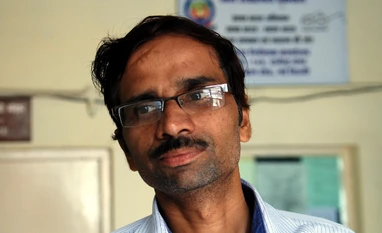
Sanjay Kumar, Domestic Breeding Checkers, NDMC
Sanjay Kumar
Veer Arjun Singh
Last Updated : Sep 08 2017 | 10:23 PM IST
Skinny, short and noticeably sharp, Sanjay Kumar, 42, was a young, unmarried man in his early 20s when he had joined municipality service as a Malaria beldar (worker). It was 1996 and the vector-borne disease had taken the form of an epidemic with hundreds of patients being rushed to overcrowded hospitals every month.

The municipal corporation had swung into action to assemble a workforce of field workers. There was little awareness about prevention, detection and cure of dengue, malaria, chikungunya and encephalitis, and the new recruits were tasked with controlling the spread of these diseases and educating the residents on a war footing. Kumar, like his peers, was hired on a contract at a monthly salary of Rs 2,300.

The booming population and the inevitable urbanisation has today sprung up uncountable multi-storeys and slums, which means Kumar and his friends, all in their 40s, climb up and down a profusion of stairs, search through houses, huts, deserted lands, dumpsters and by-lanes of every nook and corner that falls under the North Delhi Municipal Corporation. It gets particularly tough during the rains. They knock on a door, check for stranded water, inspect the minutest presence of mosquito larvae in sinks, coolers, pots, water tankers and even the water seeping through walls. They destroy the mosquito breeding hotspots, educate the residents and move on to the next house. Two decades of service later, these men and women are now called DBCs, or Domestic Breeding Checkers. And the only reminder of their seniority is their failing knees.

Year after year, Delhi has realised that it needs to do more to prevent these diseases: 60 people died of dengue and malaria in 2015, 27 in 2016 and over 900 cases have been registered this year. Yet, the 3,000 DBCs, most of whom have worked for over a decade at the same post, are fighting a parallel battle for permanent jobs.

They have never been promoted, they are underpaid, they have no medical insurance, no life risk cover, no provident corpus, no earned leaves and they can be fired without notice. Even after beseeching letters, strikes and numerous court orders, the only assurance they have been given, repeatedly, is that their reasonable ask is being considered. 

A country where it’s still being debated what right to privacy should mean for its citizens, the right to livelihood and subjects like pay parity take a comfortable back seat. When thousands are unemployed, even a contractual government job fells like a blessing. Perhaps that’s why Kumar held on to it.

Kumar was once worried about a career. He now worries about educating his three daughters and finding more work if he is forced to retire.  He recounts how his daughter once leaped at him with excitement when he reached home after work. She was to go for a school picnic the next day.

“I told her she can’t go, that we can’t afford a lot of things she sees around her. She’ll learn to manage her expectations as she grows up,” says Kumar. 

At the austere North Delhi Municipal Corporation office in Karol Bagh, such are stories aplenty. “Sunil was in his 20s when he fell from a terrace while inspecting a water tank and died. His wife now leaves her two children with relatives to do his job and survive,” recounts one of  the DBCs. The father of four asks not to be named for the fear of losing his job. Then there is the story of a person who was electrocuted from a faulty cooler. “They could leave nothing for their families,” says another worker.

Kumar is an arts graduate and fluently drops in dates, names of judges, and quotes from verdicts given in their favour. Of every wrong in their employment contract, he names his colleagues who are suffering the most because of it. For himself, Kumar just hopes that after his last day at work, he doesn’t go home to his daughters empty-handed.

One subscription. Two world-class reads.

Already subscribed? Log in

Subscribe to read the full story →
*Subscribe to Business Standard digital and get complimentary access to The New York Times

Smart Quarterly

₹900

3 Months

₹300/Month

SAVE 25%

Smart Essential

₹2,700

1 Year

₹225/Month

SAVE 46%
*Complimentary New York Times access for the 2nd year will be given after 12 months

Super Saver

₹3,900

2 Years

₹162/Month

Subscribe

Renews automatically, cancel anytime

Here’s what’s included in our digital subscription plans

Exclusive premium stories online

  • Over 30 premium stories daily, handpicked by our editors

Complimentary Access to The New York Times

  • News, Games, Cooking, Audio, Wirecutter & The Athletic

Business Standard Epaper

  • Digital replica of our daily newspaper — with options to read, save, and share

Curated Newsletters

  • Insights on markets, finance, politics, tech, and more delivered to your inbox

Market Analysis & Investment Insights

  • In-depth market analysis & insights with access to The Smart Investor

Archives

  • Repository of articles and publications dating back to 1997

Ad-free Reading

  • Uninterrupted reading experience with no advertisements

Seamless Access Across All Devices

  • Access Business Standard across devices — mobile, tablet, or PC, via web or app

Next Story



