The media is in the business of outraging: Yogendra Yadav
Interview with president of Swaraj Abhiyan
Shivam Saini Name-calling and the use of distasteful language in public discourse have become routine in Indian politics.
Yogendra Yadav, president of Swaraj Abhiyan, a splinter group of the Aam Aadmi Party (AAP), analyses the factors that could be responsible for the personalised verbal attacks by politicians that are played out on prime-time television and the social media. Excerpts from an interview with Shivam Saini
What do you think is prompting politicians to regularly use outrageous expressions, especially on television? This has gone up particularly in the political arena. And it is not because the quality of politicians has declined. In fact, it stems from an astute understanding. It's not being done when people lose control of their language; it is happening because they carefully know what they are talking about and they can anticipate its consequences.
Does this mean it is premeditated? It is to say that in the media increasingly, half the news is about "who said what". The news is not about what happens on the ground, because that takes time. Going to a village and finding out what happened takes a lot of time, energy and resources. The easiest way to manufacture news, then, is: "Oh my god, he said this." So, the simplest way to be in the news is to say something outrageous.
Some people will condemn it, but this is the cheapest and easiest publicity available in India today. And I say this not merely as an analyst; I also say this as a victim. As long as one is civil and says reasonable things in a reasonable tone, chances of getting media coverage are pretty low. But if one were to lose control every fifth day, then one's media coverage would go up substantially. So, in a sense, this is a very calculated response to a certain mediascape.
Would [the Samajwadi Party's] Azam Khan, for example, be such an important politician had it not been for his tongue? Or take [Vishwa Hindu Parishad leader] Pravin Togadia, who doesn't command many supporters. What makes everyone in this country take notice of him? That he says something ridiculous, stupid, obnoxious every now and then. And, every time he says something, he gains followers. Honestly, if the media were to simply stop taking notice, at least three-fourths of this would stop overnight.
Do you think politicians are also being provoked at times by TV news anchors to say something outrageous?
It is the political economy of the media. You could call it the business of outraging, of verbal abuse. Someone gains TRP and someone gains political followers, visibility and image. It's a full-fledged business; people are making a career out of it.
What do you think of Delhi Chief Minister Arvind Kejriwal calling Prime Minister Narendra Modi a "psychopath"?
What's outrageous is not what he has said. What's outrageous is the justification that he has given. He says this is because he comes from the rural areas. So the assumption is that everyone in rural areas is abusive. In the rural areas, people do use what is considered abuse in urban areas somewhat more liberally. But they actually do not abuse each other.
It probably could be that he doesn't understand the nuances of the language; he doesn't understand what a psychopath really is, and what it means to call someone that. But the justification is even worse. And that someone can get away with it is common in our culture.
The fact is that people who say something outrageous are, in a way, net gainers every time they say that. The gain is not designed to prove that he [Kejriwal] is more stable than other politicians. He's not interested in doing that. He's simply interested in establishing an equation that it is Modi versus Kejriwal. And as long as the headline says "It's Modi versus Kejriwal", it doesn't matter to him whether it criticises him or praises him. He's interested in portraying that he is the soul opposition to Modi, civil or uncivil. And if uncivil language gets him greater publicity, then uncivil language is perfect.
To a distant audience back home, it presents an image of someone who's out there to struggle for them, which is what they're trying to portray. By not talking about it, we'd turn off the tap.
To what extent can the media turn off the tap?
The media has exercised one significant caution of late, in the reporting of communal violence. In the same way, going back to the political economy point, the media needs to increase the cost and reduce the benefit [of the use of uncivil language by politicians]. It'll stop.

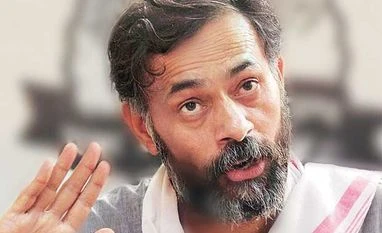 "The media is in the business of outraging: Yogendra Yadav")

