Almost shut out of India's expanding solar-panel market, the US won a ruling against domestic-production requirements, but Indian companies are overwhelmingly choosing Chinese products over US and Indian.
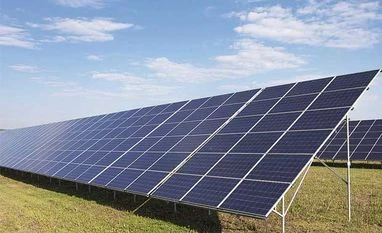
US solar-panel exports to India-which doubled its solar capacity over 22 months ending January 2016-fell 83 per cent since 2011, while Chinese exports grew 90 per cent over the same period, according to an IndiaSpend analysis of Indian commerce ministry data.
Plunging US exports led that country to successfully dispute a "make in India" requirement for solar panels and modules used in the country's national solar-power programme. That requirement was inconsistent with international trade norms, the World Trade Organization (WTO) ruled late in February.
Domestic-content requirements (DCR) were imposed in 2011 for government solar-power projects.
China's solar-panel exports grew from $577 million in 2011-12 to $1,094 million in 2015-16 (April-December). China is the largest exporter of solar panels (solar cells/photovoltaic cells, whether assembled or in module/panel form) to India, accounting for 65 per cent or $3.2 billion of $5 billion in solar-panel imports by India over the past five years.
India's import of solar panels from across the world increased 60 per cent, from $821 million in 2014-15 to $1.3 billion in 2015-16 (April-December), despite the DCR, and it has been reported that India will contest the ruling.
The US ranks fifth in terms of India's imports of solar panels, based on data for 2015-16 (April-December). Over the last five years, India has imported solar panels worth $298 million from the US. India's imports of solar panels from the US declined 83 per cent, from $120 million in 2011-12 to $21 million in 2015-16 (April-December).
Chinese panels are cheaper by Rs 5 to Rs 6 each than those produced domestically. In addition, there are quality issues with locally made panels and cells, according to this The Economic Times report. While a consignment from China takes 30-45 days to be delivered, there are few customers for domestically produced solar panels.
Why the US wants a slice of India's solar market India's solar-power market is growing rapidly, and the US has complained against what they call "discrimination against imported products" from accessing this market.
For instance, the installed solar-power capacity in India grew 100 per cent over the last 22 months, according to government data, from 2.6 GW in March 2014 to 5.2 GW in January 2016. Similarly, installed renewable capacity grew 25 per cent over the same period.
Solar power crossed the milestone of 5 GW in January 2016 and is expected to achieve the government's target of generating 100 GW by 2021-22. If the 2022 solar target is met, it will become India's second-largest energy source, IndiaSpend reported recently.
The decline in tariffs has encouraged a growing number of consumers to bypass India's creaky electricity grid and directly go solar. The price of solar energy has fallen by half over two years, from Rs 10-12 per unit to Rs 4.63 per unit in 2015, IndiaSpend had reported earlier, edging closer to coal.
The government plans to achieve 20 GW through ultra-mega solar parks, and has approved 33 solar parks in 21 states at a cost of Rs 374 crore ($58 million).
The government auctioned 375 MW of solar PV projects in 2013 under Batch-I Phase-II of Jawaharlal Nehru National Solar Mission and 500 MW under Batch-II Phase-II in 2014, which must use domestic modules, according to the DCR.
India's installed power capacity stands at 289 GW, of which renewables account for 14 per cent. Wind energy with 25 GW installed capacity accounts for nine per cent, while solar constitutes two per cent. Thermal energy accounts for 70 per cent of India's installed capacity, with coal cornering 61 per cent share.
India's solar-power prices are now within 15 per cent of coal, which will decline by another 10 per cent than domestic coal by 2020, based on current trends, according to this CNN report.
Reprinted with permission from IndiaSpend.org. Indiaspend.org is a data-driven, public-interest journalism non-profit

 "US and India feud over solar rules; China corners market")


 Connect with us on WhatsApp