
US begins study assessing allergic reactions to Pfizer, Moderna vaccines
Data from the study, which is sponsored and funded by the NIAID, is expected to be released in late summer
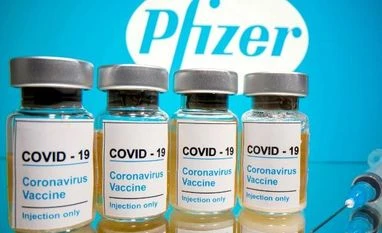 "US begins study assessing allergic reactions to Pfizer, Moderna vaccines")
WebinarsNew
Deep DiveNew
Explore Business Standard
Data from the study, which is sponsored and funded by the NIAID, is expected to be released in late summer
Washington [US], April 8 (ANI): US' National Institutes of Health (NIH) announced on Wednesday that it is launching a study to determine the risk of allergic reactions to the Pfizer-BioNTech and Moderna vaccines among certain individuals.
A clinical trial is underway to determine whether people who are highly allergic or have a mast cell disorder are at increased risk for an immediate and systemic allergic reaction to the Moderna or Pfizer-BioNTech COVID-19 vaccines.
"The public understandably has been concerned about reports of rare, severe allergic reactions to the Moderna and Pfizer-BioNTech COVID-19 vaccines," said Anthony S Fauci, MD, director of the National Institute of Allergy and Infectious Diseases (NIAID), part of the National Institutes of Health. "The information gathered during this trial will help doctors advise people who are highly allergic or have a mast cell disorder about the risks and benefits of receiving these two vaccines. However, for most people, the benefits of COVID-19 vaccination far outweigh the risks."
Data from the study, which is sponsored and funded by the NIAID, is expected to be released in late summer.
The study team will enroll 3,400 adults aged between 18 and 69 years at up to 35 academic allergy-research centres nationwide. About 60 percent of study participants, group 1, must have either a history of severe allergic reactions or a diagnosis of a mast cell disorder, while 40 per cent of participants, group 2, will not.
Study staff will collect blood, urine and nasal swabs from participants before each injection, and blood and urine after each injection.
If a significant number of systemic allergic reactions to either or both vaccines occur during the trial, investigators will analyse these biological samples to examine possible mechanisms for the reactions and whether certain genetic patterns are associated with higher risk.
The Moderna and Pfizer-BioNTech COVID-19 vaccines are the first two coronavirus vaccines authorised by the Food and Drug Administration for emergency use and already have been given to millions of Americans.
Most of the rare, severe allergic reactions to these vaccines have occurred in people with a history of allergies. A substantial number of these people had previously experienced a life-threatening allergic reaction called anaphylaxis.
(Only the headline and picture of this report may have been reworked by the Business Standard staff; the rest of the content is auto-generated from a syndicated feed.)
First Published: Apr 08 2021 | 9:05 AM IST


 Connect with us on WhatsApp