World's first self-styled space trader scopes out a $43-billion industry

Nagasaki's startup, Space BD Inc. wants to become a one-stop shop for companies looking for room on rockets, offering technical advice and matching them to launch operators

Masatoshi Nagasaki is the world’s first self-styled space trader. He won a contract with JAXA, Japan’s space agency, a year after starting Space BD in 2017
Masumi Suga and Hiromi Horie | Bloomberg
3 min read Last Updated : Oct 05 2019 | 11:55 PM IST
The business of manufacturing and launching small satellites is projected to grow almost fourfold over the coming decade to $42.8 billion, creating an opportunity for those seeking to profit from increased commerce between companies in the industry.

One of them is Masatoshi Nagasaki, the world’s first self-styled space trader.

The 39-year-old doesn’t work in a spacecraft, jetting from planet to planet like a character in an Isaac Asimov novel. Instead, he works on the seventh floor of a building that’s become a hub for space-related startups. He’s already won contracts from Japan’s space agency to broker satellite launches.

“Space companies will definitely need traders,” said Nagasaki, dressed in a navy suit with a white shirt and no necktie. “I want to see space become an industry unto itself.”
 
Nagasaki’s startup, Space BD Inc. wants to become a one-stop shop for companies looking for room on rockets, offering technical advice and matching them to launch operators. Middlemen are now necessary to industrialize and develop businesses, Nagasaki said.

Space BD has won contracts for the deployment of at least 15 small satellites, including its first overseas deal with an academic research institute in Australia. A partnership between the University of Sydney, the University of New South Wales and 10 other institutions is working with Space BD to release CubeSats, the boxy, standardized mini satellites used to gather information in space.

Another client is Japan’s Ryman Sat Project, a group that aims to make space ventures more accessible. Founded by a group of salarymen — that’s where the “ryman” comes from — the idea is to make it easier for regular businessmen to consider opportunities for sales and investment beyond the stratosphere.

Nagasaki won his contract with JAXA, Japan’s space agency, a year after starting Space BD in 2017. It’s the first commercial service provider for deploying small satellites from a Japan-built laboratory module on the International Space Station. The startup has 16 employees, with plans to triple that number in three years.

Nagasaki is betting that Space BD will succeed because it’s based on a proven business model: the Japanese trading house. As a former steel trader at Mitsui & Co., one of Japan’s top five general trading houses, Nagasaki tracked volumes and pricing by negotiating with buyers. He also arranged investments in overseas iron ore projects, one of Mitsui’s most profitable operations. Ultimately, he wanted more control over how he worked and his own business, so he founded the startup.

Space BD launched with 100 million yen in financing from Japanese venture capital firm Incubate Fund, which along with Anniversaire Holdings invested another 200 million in the business. Nagasaki is seeking to go public in five years.

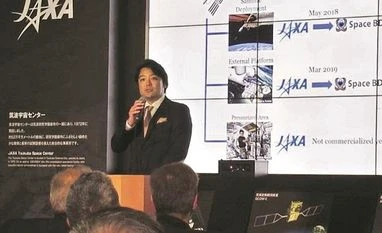
Although Nagasaki is the first to call himself a space trader, others have also jumped into the market for matching satellite operators to capacity on rockets, including Seattle-based Spaceflight Industries Inc. and NanoRacks LLC, based in Webster, Texas.

Competition is set to intensify with China entering the space market, according to Masashi Sato, chief operating officer of Spacetide, which holds businesses conferences for the space-startup community.

“The number of American space startups has grown significantly,” Sato said. “Unless a solid leader emerges in Japan, space businesses won’t expand.”

One subscription. Two world-class reads.

Already subscribed? Log in

Subscribe to read the full story →
*Subscribe to Business Standard digital and get complimentary access to The New York Times

Smart Quarterly

₹900

3 Months

₹300/Month

SAVE 25%

Smart Essential

₹2,700

1 Year

₹225/Month

SAVE 46%
*Complimentary New York Times access for the 2nd year will be given after 12 months

Super Saver

₹3,900

2 Years

₹162/Month

Subscribe

Renews automatically, cancel anytime

Here’s what’s included in our digital subscription plans

Exclusive premium stories online

  • Over 30 premium stories daily, handpicked by our editors

Complimentary Access to The New York Times

  • News, Games, Cooking, Audio, Wirecutter & The Athletic

Business Standard Epaper

  • Digital replica of our daily newspaper — with options to read, save, and share

Curated Newsletters

  • Insights on markets, finance, politics, tech, and more delivered to your inbox

Market Analysis & Investment Insights

  • In-depth market analysis & insights with access to The Smart Investor

Archives

  • Repository of articles and publications dating back to 1997

Ad-free Reading

  • Uninterrupted reading experience with no advertisements

Seamless Access Across All Devices

  • Access Business Standard across devices — mobile, tablet, or PC, via web or app

Topics :SatellitesTiny SatellitesSmall sats

Next Story




