Hydropower projects of 13,363 megawatt capacity are stranded at various stages of development and reported a cost overrun of Rs 52,697 crore, a study has found.
"Despite significant hydropower potential, till now, only 30 per cent of India's total economically feasible hydropower potential has been harnessed," the Assocham-PwC study titled 'Accelerating hydropower development in India for sustainable energy security' said.
Several hydropower projects with a cumulative capacity of about 13,363 Mw are stranded at various stages of project development, resulting in significant time and cost overruns worth Rs 52,697 crore as of December 2016, it said.
The government should explore possibility of establishing a hydropower commission as a nodal agency to coordinate with actions of various entities involved in hydropower sector value chain and facilitate investments and clearances, the study recommended.
It also said that a dedicated transmission corridor for hydropower would help in overcoming the power evacuation issues faced by hydropower developers, especially in remote north-east regions of India.
Almost one-fourth (24 per cent) of central hydro schemes are facing delays owing to local issues, law and order problems followed by geology, hydrology and topography related issues (21 per cent), noted ASSOCHAM-PwC study.
In terms of state hydro schemes, contractual disputes account for lion's share of 35 per cent while geology, hydrology and topography (35 per cent) related issues are major reasons for slippage in hydro capacity additions in private sector.
The study recommended that hydropower development in India needs to be channelised through an efficient governance framework by adopting a suitable policy framework coupled with uniform and transparent processes.
"The existing processes, structures and institutional frameworks must be re-aligned to the development goals and hydropower capacity addition targets while adequately recognising the role of the private sector," it said.
The study noted that with regard to the development of enabling infrastructure for hydropower projects, an optimum balance needs to be established between the role of the developer and the role of the state.
It has also suggested to reintroduce the Mega Power Benefits for Hydro Projects, which were withdrawn in the year 2012.
"With this, the benefits of custom duty exemption on import of capital equipment and deemed export benefits accorded as per the EXIM Policy would again be available to hydro projects."
Similarly, waiver/reduction in ad valorem charges/tax (Local Area Development Fund, entry tax, labour cess, excise duty, work charge tax, etc.) in respect of project equipment and on inputs such as steel and cement, together with exemption from GST (goods and services tax) for services used in relation to hydropower projects, shall significantly reduce project cost and consequently help in reduction of tariffs, it said.

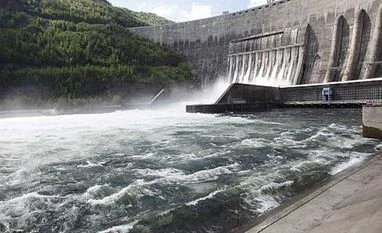 "13,000 Mw delayed hydro projects stare at Rs 52,600 cr cost overrun: Study")


 Connect with us on WhatsApp