Access to info utilities under bankruptcy law: IBBI proposes, RBI disposes

Central bank says information utilities can source all information only from credit bureaus; dispute could prolong litigation, hurt recovery of capital
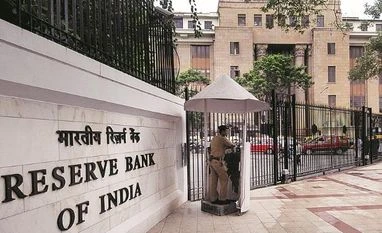
RBI office
RBI said the top 12 accounts, having an exposure of at least Rs 5,000 crore each, should be referred for bankruptcy proceedings
Subhomoy Bhattacharjee New Delhi
Last Updated : Dec 19 2017 | 1:45 AM IST
Even as the Insolvency and Bankruptcy Board of India (IBBI) has issued standards for public information registries or information utilities to make the bankruptcy process work smoother, the Reserve Bank of India (RBI) has thrown a spanner in the works. 

Unless resolved soon, the dispute could prolong bankruptcy litigation and hurt the recovery of capital from companies that face sell-off or liquidation. 

The dispute is simple. Should any entity other than credit bureaus (Cibil, etc) have independent access to a company’s financial information as sourced from banks? The IBBI feels it is necessary, but the RBI differs. 

The bankruptcy law requires banks to provide legally verified copies of their relevant documents to information utilities. Section 215 of the Insolvency and Bankruptcy Code (IBC) obliges a financial creditor to submit financial information to information utilities. These utilities will be record keepers of such documents, storing them for providing information that can be drawn upon by courts or tribunals.

Since the utilities have to also ensure that these documents are certified true by both parties to the dispute, the lenders and the borrowers, they become verified documents on which the courts and tribunals can rely on to pass quick judgments. The RBI has issued an amendment to a gazette notification in August this year that apparently defeats this role of the information utilities. It has mandated that the information utilities set up under the bankruptcy regime are obliged to source all information only from credit bureaus. 

So the primary sourcing of information from the banks has to be carried out by the bureaus, who will then pass them on to the utilities, depending on their discretion. The dispute became big enough to land on the table of the Financial Stability and Development Council (FSDC) at its last meeting. 

The FSDC brings the Indian financial regulators together under the chairmanship of the finance minister to assess the risk-reward environment of the sector. Specific issues that require detailed assessment are handled by a sub-committee of the FSDC headed by the RBI governor. This committee has given the IBBI the go-ahead to discuss with banks if they would want to share such data with the information utilities. India has obtained a full-fledged bankruptcy law in 2016 and more than 400 cases have already been filed in the courts since.  

But as the RBI has not withdrawn the amended gazette notification, banks are obviously reluctant to share financial information about companies despite prodding by the bankruptcy board. In a letter to M S Sahoo, chairman of the IBBI, S Ramann, managing director of the first such utility, National e-Governance Services (NeSL), has made the same point. “…since the financial creditors squarely by the RBI, in absence of a notification/direction by the RBI allowing or directing the financial creditors to submit financial information with NeSL in  accordance with provision of the IBC, the purpose of the IBC could not be realised absolutely”. 

The RBI did not respond to this story. Others involved in the issue did not wish to comment because of the sensitivity of the subject. The IBBI has also argued that information kept with the information utilities can be accessed by domestic and foreign creditors to the company that is headed for bankruptcy courts. 

Credit information bureaus cannot give out such information which cripples the rights of the lenders to secure a fair deal in cases of bankruptcy.


One subscription. Two world-class reads.

Already subscribed? Log in

Subscribe to read the full story →
*Subscribe to Business Standard digital and get complimentary access to The New York Times

Smart Quarterly

₹900

3 Months

₹300/Month

SAVE 25%

Smart Essential

₹2,700

1 Year

₹225/Month

SAVE 46%
*Complimentary New York Times access for the 2nd year will be given after 12 months

Super Saver

₹3,900

2 Years

₹162/Month

Subscribe

Renews automatically, cancel anytime

Here’s what’s included in our digital subscription plans

Exclusive premium stories online

  • Over 30 premium stories daily, handpicked by our editors

Complimentary Access to The New York Times

  • News, Games, Cooking, Audio, Wirecutter & The Athletic

Business Standard Epaper

  • Digital replica of our daily newspaper — with options to read, save, and share

Curated Newsletters

  • Insights on markets, finance, politics, tech, and more delivered to your inbox

Market Analysis & Investment Insights

  • In-depth market analysis & insights with access to The Smart Investor

Archives

  • Repository of articles and publications dating back to 1997

Ad-free Reading

  • Uninterrupted reading experience with no advertisements

Seamless Access Across All Devices

  • Access Business Standard across devices — mobile, tablet, or PC, via web or app

Next Story


