
'Call set up time' a problem, will seek related data from operators: Trai
Trai will thoroughly analyse it to determine whether average values can be prescribed, or any action taken in case such duration is abnormally long
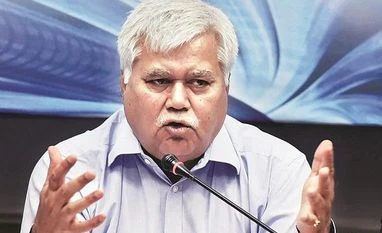 "'Call set up time' a problem, will seek related data from operators: Trai")
WebinarsNew
Deep DiveNew
Explore Business Standard
Trai will thoroughly analyse it to determine whether average values can be prescribed, or any action taken in case such duration is abnormally long
Keeping its vigil on service quality, regulator Trai said Wednesday that delay in 'call set up time' is a problem currently and it will seek related data from operators from October 1 to find a solution to the issue.
Put simply, call set up time refers to time taken to connect a call after a subscriber finished dialling a number.
"There are 1-2 things which are posing difficulty which, I think, is a temporary problem. One is the 'call set up time' because of multiple technologies ... we have decided to measure call set up time, and after measuring maybe we will know what are the average values, and those can probably be prescribed as a norm," Telecom Regulatory Authority of India (Trai) Chairman R S Sharma told PTI.
Admitting that 'call set up times' have "increased in general" and in some cases end up being as long as 30 seconds, Sharma said the regulator is seeking data related to this from operators from October 1. TRAI will thoroughly analyse it to determine whether average values can be prescribed, or any action taken in case such duration is abnormally long.
He said that there are different technologies that exist in telecom network -2G, 3G and 4G.
Sharma explained that when a person on 2G network calls a 4G subscriber, the signal takes time in finding path to connect on to other network and in the meantime the customer himself disconnects the call and dial again which again takes time.
He said that call set-up is not in control of telecom operator and it is a technology issue.
"We have decided to collect data on call set-up time and then we learn about some average standard within which call can be set-up. However, whether it should be made a quality of service parameter, that decision is yet to be taken. We don't see any benefit that a telecom operator will derive from delay in call set-up time," Sharma said.
Another problem area - call muting or period during which a caller don't get to listen voice- is being included in the service quality parameters starting this month, he added.
"And on the call mute, 98 per cent packets must reach the destination, not more than two per cent packets should drop... that will also become effective from October 1," he said.
Outlining its approach taken by TRAI to deal with call drop issue in the sector, Sharma said that regulator has tightened the service quality norms applicable on operators, and also increased the scope of its drive tests.
"We have revised the norms ... We have been fining also continuously since last three quarters, and the data for the fourth quarter will come by October 21, which we will analyse," Sharma said.
First Published: Oct 10 2018 | 8:30 PM IST


 Connect with us on WhatsApp