To tide over India’s perennial fodder shortage that in turn affect milk output, the Centre is planning to identify at least two hectares of grazing land in each district to be developed into ‘fodder farms’, where high-quality fodder would be grown.
“Irrigation for such farms would be provided by the government while labour from MNREGS (Mahatma Gandhi National Rural Employment Guarantee Scheme) would be used to develop the land,” said animal husbandry secretary Devendra Chaudhry.
The land will be managed by a cooperative or village society so that there is no conflict over ownership.
The Centre will provide high-quality seeds and technical expertise to farmers to grow fodder. If successful, the experiment will pave the way for long-term solution to India’s fodder shortage.
According to an estimate by the National Institute of Nutrition, India’s total land earmarked for fodder cultivation could drop by 14.2 per cent by 2020 compared to 8.3 million hectares in 1990. At present, the area stands at 7.9 million hectares.
Permanent pastures and grazing land, which can used by livestock for their food is also expected to go down by 16 per cent by 2020 from 11.3 million hectares in the 1990s.
This drop in land under fodder and also grazing land for cattle could further aggravate the already poor availability of fodder in the country.
Estimates show that by 2020, the availability of India’s dry fodder might be 24 per cent less than demand, while green fodder could be short of 33 per cent.
Officials say India with a wheat production of 90 million tonnes annually produces adequate quantities of fodder, but these never reach the market as farmers burn the residual waste. The government wants farmers to stop this practice.
Chaudhry said the National Dairy Development Board would produce 200,000 tonnes of fodder seed in the next year, which could be later scaled up to 500,000 tonnes.
“If we want to achieve the ambitious target of doubling India’s milk production by 2020, a new fodder revolution is needed,” Chaudhry noted.

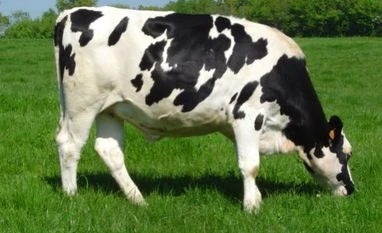 "Centre to set up fodder farms in districts")

