Cleaner fuel may mean 60-mt loss of demand by 2035: CRISIL report

In 2017-18, India's petrol consumption was at 26.2 million tonnes and diesel was 81.1 million tonnes
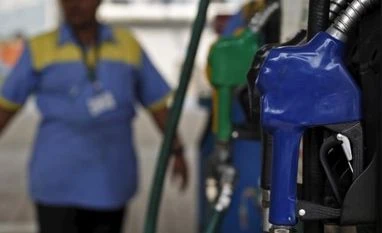
Photo: Reuters
An employee stands next to a pump at a fuel station in New Delhi | Photo: Reuters
Amritha Pillay Mumbai
Last Updated : Nov 21 2018 | 5:36 AM IST
The country’s attempts to use cleaner fuel in the long term may translate into a 55-60 million tonne loss of fuel demand for refiners by 2035, a CRISIL report suggests.

As demand growth may saturate by 2030, higher exposure to petroch­emicals instead of fuel may be the way forward. Refiners may explore exports to neighbouring countries as an option but that could offer limited benefits.

“By 2035, we expect nearly 55-60 million tonnes of loss in fuel demand owing to penetration of electric vehicles and improvements in vehicle efficiency,” CRISIL said in a note shared with Business Standard. The rating agency expects annual fuel consumption to grow at 7% to 8% compound annual growth rate (CAGR) between 2020 and 2025, and then moderate to 3-4% CAGR between 2025 and 2030 and 2% to 3% CAGR between 2030 and 2035, after peaking out in 2030.

In 2017-18, India’s petrol consumption was at 26.2 million tonnes and diesel was 81.1 million tonnes. CRISIL data shows that of the 12 refinery expansions and capacity add­itions which are likely to be commissioned between fiscal year 2024 and fiscal year 2030, five are inte­grated with petrochemical facilities.

“Planned capacities may partly address the loss in fuel demand but not completely. More capacities may have to be integrated in order to take advantage of the opportunity in petrochemicals and offset loss in fuel demand over the longer term,” Rahul Prithiani, director, CRISIL Research, said. A senior official from one of the three oil marketing companies (OMC) agrees that refiners can explore products like polymer and glycol, where demand is expected to remain robust. The CRISIL note also stated, “India is a net importer of polymers. Import dependence on polymers offers a huge scope for capacity addition.”

While there is a new opportunity opening up for Indian refiners, it may take few more years before the actual investment materialises. “The expansions under way right now may not have taken long term decline in fuel demand into account; however, I expect actual investments, which will happen in the 2025-2030 phase, to result in changes being incorporated in the expansion plans,” the official quoted earlier in the story said.

Prithani added the gestation period for a greenfield refinery or petrochemicals complex is five years. “For the total 342 million tonnes of refining capacity by 2030, nearly 45-50% of it needs to have high-severity fluidised catalytic cracking (HS-FCC) units (as of now, only 35% are expected to have them) to meet the domestic propylene demand. To meet ethylene demand, additional investment is required towards steam crackers,” he said, highlighting the extent of new investment potential that refiners can look at. CRISIL, in its report, noted that petrol and diesel account for more than 50 per cent of the overall refinery slate in India, with Reliance Industries’ Jamnagar facility being an exception. “With slowdown in fuel demand and reduction in gross refining margins (GRM), refiners are staring at a profitability risk,” the report said. The official quoted earlier in the story added there are a couple of other options for refineries in India, exports being one of them. “In addition to petchem integration, exports are another option that is being considered. Refineries could look at exports to neighbouring countries like Bangladesh and Myanmar,” he added.

More focus on exports may see a change in the share of public sector companies in the country’s total petroleum, oils, and lubricants (POL) exports, which was at 21.6% in the April-September 2018 period, according to Petroleum Planning and Analysis Cell (PPAC) data.

However, not everyone is convinced with the option. “Stringent targets for improving fuel efficiency in vehicles, rapid shift to alternate technologies like electric vehicles and move towards cleaner fuels are expected to slow down fuel/product demand growth significantly in the medium to long term globally. As a result, even the export market will not remain viable in the long term,” Prithiani added.

One subscription. Two world-class reads.

Already subscribed? Log in

Subscribe to read the full story →
*Subscribe to Business Standard digital and get complimentary access to The New York Times

Smart Quarterly

₹900

3 Months

₹300/Month

SAVE 25%

Smart Essential

₹2,700

1 Year

₹225/Month

SAVE 46%
*Complimentary New York Times access for the 2nd year will be given after 12 months

Super Saver

₹3,900

2 Years

₹162/Month

Subscribe

Renews automatically, cancel anytime

Here’s what’s included in our digital subscription plans

Exclusive premium stories online

  • Over 30 premium stories daily, handpicked by our editors

Complimentary Access to The New York Times

  • News, Games, Cooking, Audio, Wirecutter & The Athletic

Business Standard Epaper

  • Digital replica of our daily newspaper — with options to read, save, and share

Curated Newsletters

  • Insights on markets, finance, politics, tech, and more delivered to your inbox

Market Analysis & Investment Insights

  • In-depth market analysis & insights with access to The Smart Investor

Archives

  • Repository of articles and publications dating back to 1997

Ad-free Reading

  • Uninterrupted reading experience with no advertisements

Seamless Access Across All Devices

  • Access Business Standard across devices — mobile, tablet, or PC, via web or app

Next Story


