The data on India’s domestic coal production and imports suggests that the coal crisis is largely due to decline in supply rather than high demand. For the first time in decades, coal supply (domestic production plus imports) was lower than consumption for four consecutive years - between 2017 and 2020 — leading to depletion of stocks in the entire supply chain.
India’s total coal supply in calendar year (CY) 2020 had declined to a five-year low of 16.9 exajoules (EJ) of coal equivalent, against consumption of 17.54 EJ of coal equivalent, according to the data from BP Global Energy Statistics.
The shortfall in supply in CY20 was equivalent to nearly four weeks of Coal India’s (CIL’s) production in 2020-21 (FY21). The miner accounts for nearly 80 per cent of India’s coal production.
Meanwhile, the demand for coal has been soft in recent years due to poor industrial growth and growing share of renewable energy in the overall power mix. The overall coal consumption in CY20 was down 5.7 per cent to 17.5 EJ - the lowest in three years.
“The data points towards a shortfall in coal supply in recent years, despite a fall in demand due to decline in power generation and lower industrial activity last year,” says Dhananjay Sinha, managing director and chief strategist, JM Financial Institutional Securities.
An EJ is equivalent to around 59.3 million tonnes (mt) of coal on average in the past five years. CIL’s coal production in FY21 at 596.2 mt was equivalent to 10.1 EJ of coal.
Things haven’t changed much in CY21 either. CIL’s total production was down 2.3 per cent year-on-year (YoY) in the January-September period, while offtake was up 0.1 per cent YoY.
CIL produced 453.2 mt of coal in the first nine months of CY21, down from 463.5 mt during the same period in CY20. In comparison, the miner despatched 472.6 mt of coal during the January-September period, marginally higher than 472 mt during the same period a year ago.
The biggest supply shock has, however, come from a sharp cut in coal imports in the last five years. Coal imports were down 10.2 per cent YoY in CY20 to 4.22 EJ of coal equivalent. Coal imports last year were the lowest in seven years and down 35 per cent, from the peak of 6.46 EJ equivalent of coal in CY16.
As a result, there has been a sharp decline in the import share in total coal consumption in India. Imports accounted for 25 per cent of India’s total coal consumption in CY20, down from a high of 35 per cent in CY16. Last year, the Centre unveiled plans to phase out coal imports.
But there has been a steady decline in CIL production, from the peak of 607 mt reached in 2018-19. The miner is expected to produce 585 mt of coal in 2021-22 (FY22). This will be 21 per cent lower than its target to supply 740 mt of coal in FY22.
Prior to the 2020 lockdown, coal consumption in India grew at a compound annual growth rate (CAGR) of 2.8 per cent in the 2014-19 period, down sharply from CAGR of 7.2 per cent in the 2004-14 period. In comparison, domestic coal production grew at a CAGR of 2.2 per cent in the 2014-19 period, down from 4 per cent in the 2004-14 period.
Economists say that the shortage of coal and a cut in power generation and the resultant blackouts are likely to impact India’s economic growth. “A cut in power supply will not only hit industrial output, but also disrupt work-from-home industries,” says Madan Sabnavis, chief economist, CARE Ratings.
The coal shortage will also result in inflation if power utilities and coal-burning firms are forced to use expensive imported coal to meet domestic supply shortfall.

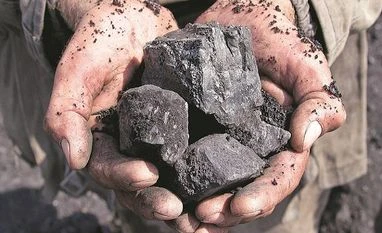 "Coal shortage a supply issue with availability at 5-year low, shows data")












 Connect with us on WhatsApp