After several months of sluggish growth, export credit by banks has risen significantly. The outstanding gross export bank credit saw a 27.9 per cent increase as of August 2016 on a year-on-year basis, against 19.2 per cent in September 2015, data from Reserve Bank of India show.
After a sustained period of negative growth, export credit has been witnessing a positive growth for the past six months. Exporters attribute this recovery to better exports in geographies such as the European Union, along with the reintroduction of interest equalisation scheme, which was earlier known as interest subvention.
In November 2015, the government had introduced a three per cent interest equalisation scheme on pre-and post-shipment rupee export credit, retrospectively with effect from April 1, 2015 for five years. In April 2014, the government had withdrawn three per cent interest subvention scheme for exports. Lower interest rates were also a contributing factor for increased export credit.
“There are encouraging signs of exports and many sectors are picking up. There is a big demand in project finance, requiring medium and long-term credit. However, global growth remains a challenge. India’s growth in trade was around 10 per cent for a decade, mainly because of high global growth in trade.
Also, export credit insurance facilities need to be strengthened,” said Yaduvendra Mathur, chairman and managing director at Exim Bank.
It may be noted that India’s merchandise exports during September 2016 has shown signs of revival registering 4.62 per cent growth in dollar terms (5.45 per cent higher in rupee terms) valued at $22,880.56 million (Rs 1,52,699.59 crore) in September 2016, against $21,869.36 million (Rs 1,44,814.06 crore) during September 2015.
According to Suranjan Gupta, additional executive director at the Engineering Export Promotion Council of India, engineering exports to the European Union in the month of September saw a 20 per cent growth on a year-on-year basis, against 12.8 per cent in the same period last year.
“In September, there has been a revival in some markets in Europe. Domestic situation is not great; so manufactures are pushing for exports. Both in the months of July and September, engineering exports on an average was above $5 billion,” said Gupta. Exporters also attribute longer credit period offered by Indian exporters to the increase in export credit. Earlier, Indian exporters were offering goods at 30-60 days credit period; they are now offering the same at 60-90 days period. Thus, by offering an extended time of repayment, exporters are looking to incetivise international buyers. In consequence, the loans in books of banks remain outstanding for a longer period.
“In the past two months, we have seen exports have shown growth. We are getting a longer credit period, which means need for finance goes up.
Earlier, we used to sell goods at a credit of 30-60 days, but now we are selling at 60-90 days due to demand constraints,” said P K Shah, director of Nipha Exports.

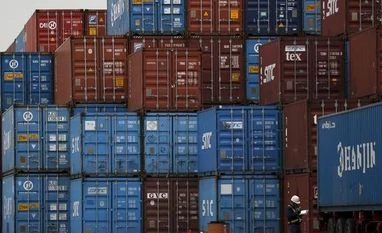 "Export credit breaks trend to show sharp rise")


 Connect with us on WhatsApp