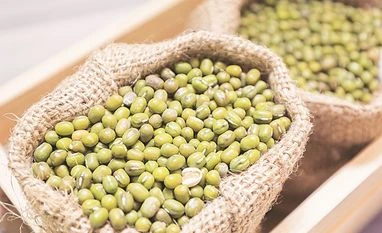
Extended rains lower acreage in rabi season; sowing of gram down 22%

According to most market participants, with the ideal time for sowing chana nearing its end, final output could get impacted unless there is a big jump in acreage in the next few weeks

chana, dal, pulses
Representative Image
Sanjeeb Mukherjee New Delhi
2 min read Last Updated : Nov 23 2019 | 1:51 AM IST
Sowing of gram, one of the biggest pulses grown during the rabi season, was around 22 per cent less than the same period last year (till Friday). 

This was because of the excess moisture in the soil left behind from the extended rains in major growing states, Madhya Pradesh and Karnataka.

According to most market participants, with the ideal time for sowing chana nearing its end, final output could get impacted unless there is a big jump in acreage in the next few weeks. This should ideally push up chana prices in the spot markets. Rates already jumped in the futures on Friday in anticipation of a sharp fall in production in 2019-20.

Chana is the biggest pulses grown in India. And, any increase in the prices will have a cascading effect on the whole pulses complex as well.


The NCDEX December Chana futures on Friday closed at Rs 4,461 a quintal which is Rs 42 more than the previous day’s close, while the January futures closed at Rs 4,465 a quintal, up Rs 38 from previous close.

Though the quoted price is still lower than the 2020-21 chana minimum support price (MSP) of Rs 4,875 per quintal, improvement in prices pushed up the sentiment.

“Going forward, chana production will closely be watched as any drop in output will push up prices,” said a leading trader. In case of wheat, which was the biggest foodgrain grown in the rabi season, area sown till Friday was 9.96 million hectares. This was just 0.28 million hectares less than last year.

Wheat acreage has shown a smart recovery in the last few weeks due to increased sowing in MP and Punjab.

Mustard was sown in around 5.07 million hectares, till Friday. This was 5.44 per cent less than last year. However, in case of both wheat and mustard, the window of sowing is still open and acreage can improve in the next coming weeks.

In total, rabi crops were sown in around 25.10 million hectares till Friday, which was 9.30 per cent less than the same period last year.

One subscription. Two world-class reads.

Already subscribed? Log in

Subscribe to read the full story →
*Subscribe to Business Standard digital and get complimentary access to The New York Times

Smart Quarterly

₹900

3 Months

₹300/Month

SAVE 25%

Smart Essential

₹2,700

1 Year

₹225/Month

SAVE 46%
*Complimentary New York Times access for the 2nd year will be given after 12 months

Super Saver

₹3,900

2 Years

₹162/Month

Subscribe

Renews automatically, cancel anytime

Here’s what’s included in our digital subscription plans

Exclusive premium stories online

  • Over 30 premium stories daily, handpicked by our editors

Complimentary Access to The New York Times

  • News, Games, Cooking, Audio, Wirecutter & The Athletic

Business Standard Epaper

  • Digital replica of our daily newspaper — with options to read, save, and share

Curated Newsletters

  • Insights on markets, finance, politics, tech, and more delivered to your inbox

Market Analysis & Investment Insights

  • In-depth market analysis & insights with access to The Smart Investor

Archives

  • Repository of articles and publications dating back to 1997

Ad-free Reading

  • Uninterrupted reading experience with no advertisements

Seamless Access Across All Devices

  • Access Business Standard across devices — mobile, tablet, or PC, via web or app

Topics :chanaRabi acreage

Next Story