
FDI inflow from China declines to $163.77 million in FY20: Anurag Thakur
There has been decline in foreign direct inflow from China in the last three years with FDI coming down to $163.77 million in 2019-20, Anurag Singh Thakur informed Lok Sabha
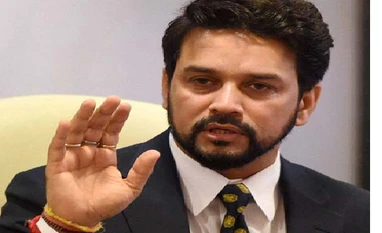 "FDI inflow from China declines to $163.77 million in FY20: Anurag Thakur")
Explore Business Standard

Associate Sponsors
Co-sponsor
There has been decline in foreign direct inflow from China in the last three years with FDI coming down to $163.77 million in 2019-20, Anurag Singh Thakur informed Lok Sabha
There has been decline in foreign direct inflow from China in the last three years with FDI coming down to USD 163.77 million in 2019-20, Minister of State for Finance Anurag Singh Thakur informed Lok Sabha on Monday.
Giving details of the total foreign direct investment (FDI) inflow from Chinese companies in India, he said, it was USD 350.22 million in 2017-18, while it declined to USD 229 million in the following year.
During 2019-20, FDI further came down to USD 163.77 million, he said in a written reply on the first day of the monsoon session.
With regard to outflow from India, he said, it was USD 20.63 million in calendar year 2020 as against USD 27.57 million in the corresponding period last year.
To curb opportunistic takeovers or acquisitions of Indian companies due to the current COVID-19 pandemic, the government issued Press Note 3 earlier this year, he said.
"A non-resident entity can invest in India, subject to the FDI policy except in those sectors/activities which are prohibited.
However, an entity of a country, which shares land border with India or where the beneficial owner of an investment into India is situated in or is a citizen of any such country, can invest only under the government route," he said quoting the Press Note 3.
Further, he said, "a citizen of Pakistan or an entity incorporated in Pakistan can invest, only under the government route, in sectors/activities other than defence, space, atomic energy and sectors/activities prohibited for foreign investment."
Replying to another question, Thakur said, the Department of Expenditure has released the central share of State Disaster Response Fund (SDRF) to the states including Maharashtra in the first week of April 2020 in the view of the pandemic.
Further, to provide additional resources to states to fight against COVID-19 and considering the request of the states for relaxation of the existing Fiscal Responsibility and Budget Management Act (FRBM) limit of 3 per cent of gross state domestic product (GSDP), additional borrowing limit of up to 2 percent of GSDP has been allowed to states for the year 2020-21, he said.
Out of the additional borrowing limit of 2 per cent of GSDP allowed to states, consent of 0.50 per cent of GSDP amounting to Rs 1,06,830 crore has already been issued to the states including the consent of Rs 15,394 crore to the state of Maharashtra to raise open market borrowing (OMB) during the year 2020-21, he added.
(Only the headline and picture of this report may have been reworked by the Business Standard staff; the rest of the content is auto-generated from a syndicated feed.)
First Published: Sep 14 2020 | 12:57 PM IST

