The K V Kamath Committee has identified 26 sectors, including ferrous and non-ferrous, impacted by the pandemic for a loan restructuring scheme to be rolled out by banks and non-banking financial companies.
The committee has identified five key ratios with different limits across sectors as a threshold for implementing a resolution plan. The five key ratios are: total outside liability/adjusted tangible net worth, total debt/earnings before interest, tax, depreciation, and amortization (Ebitda), current ratio, debt service coverage ratio, and average debt service coverage ratio.
For the steel sector — under stress before Covid-19, and with a current debt of Rs 2.66 trillion — the debt/Ebitda ratio has been kept at 5.3; for non-ferrous 4.5.
Jayanta Roy, senior vice-president, ICRA, said the iron and steel sector has a threshold of 5.3x for total debt relative to Ebitda, against 4.5x for the non-ferrous metals sector.
“This could be because of existing higher leverage of steel companies, compared to non-ferrous metals players, and/or expectation of slower improvement of Ebitda for stressed steel companies in the medium term,” added Roy.
The problem, analysts pointed out, could be with the medium players in the sector. Roy said the estimated debt/Ebitda was over 8x after the first half of 2019-20 for 17 mid-sized listed steel companies. It stood at 5.6x in March 2019.
In steel, about 50 per cent of production is accounted for by the large integrated steel players. It’s the balance secondary producers more affected by Covid-19 and still reeling from the crises. The integrated producer, for instance, is operating at 85-90-per cent capacity, but the average capacity utilisation in the sector is around 60 per cent. “That gives a sense of the problem that secondary producers are facing,” observed an analyst.
A secondary producer said a large number of players would not be able to avail of the framework because of ratios. “Moreover, it has to be closed by December, which is very difficult because under the current circumstances, it is not possible to make any projections,” he said.
“This framework does not hold potential for players like us,” said a mid-sized aluminum company producer.
Sunil Kanoria, vice-chairman, Srei Infrastructure Finance, however, said the Kamath panel has given more leeway to lenders.

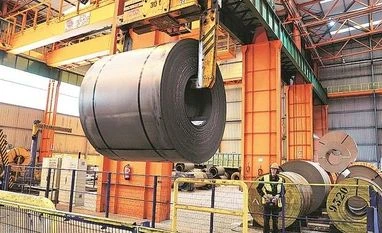 "Ferrous, non-ferrous firms will have to iron out loan-rejig challenges")












