FinMin blinks on PF decision
Raises interest rate to 8.8% for this year, but advises labour ministry to create reserve fund
Arindam Majumder New Delhi In a third flip-flop, the government has decided to reverse its earlier decision of reducing the interest rate on Employees’ Provident Fund deposits for 2015-16 and instead keep it at 8.8 per cent, in line with the stand of the Central Board of Trustees (CBT) of the EPF Organisation (EPFO).
The labour ministry had tried to persuade its finance counterpart to give in and the consultations worked, said labour minister Bandaru Dattatreya. The CBT had recommended 8.8 per cent in February; on Monday, the minister had informed the Lok Sabha that the finance ministry was approving only 8.7 per cent — a CBT decision has to be ratified by the latter on this issue. It was probably the first such occasion when the finance ministry had so disagreed.
There have been other retreats in recent days on EPF decisions. Such as on the earlier decision to tax 60 per cent of PF money on withdrawal and also on the stringent conditions decided for premature withdrawal.
In its reasoning on the interest rate, the finance ministry said EPFO’s earnings for 2015-16 were not enough to pay 8.8 per cent. Till now, it noted, the interest income earned on 90 million inoperative accounts, a total principal amount of Rs 35,500 crore, was being distributed among existing account holders but this would no longer be possible, owing to a recent CBT decision. The labour ministry gave an explanation for why this wasn’t quite so.
Also, said finance ministry sources, the labour ministry had clarified that the earnings in 2014-15 turned out to be more than the estimates, and were used to recommend 8.8 per cent.
Sources also said finance had advised labour to create a reserve fund for the future, to help protect workers from interest rate shocks in a regime of falling rates.
As of end-March 2015, the EPFO had earned interest of Rs 2,800 crore on inoperative accounts, on which it had stopped paying interest since 2011.According to an official panel, EPFO would earn Rs 34,844 crore in 2015-16, sufficient to offer an interest rate of 8.95 per cent to the retirement fund body’s 50 million subscribers.
“We were able to explain to the ministry that we never touch that amount and, hence, have a cushion,” explained labour secretary Shankar Agarwal.
Trade unions had protested at the finance ministry’s stand; they marked Friday’s announcement as a victory.

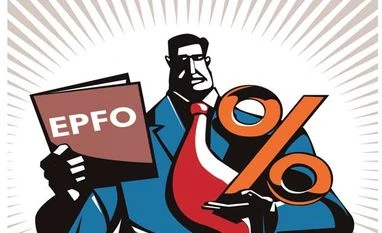 "FinMin blinks on PF decision")


 Connect with us on WhatsApp