FinMin pitches India ratings upgrade to Fitch
Team led by CEA explains pluses in Budget, economy; argues why investment and growth are set to rise, why deficit control timetable is credible
BS Reporter New Delhi Union finance ministry officials met representatives from Fitch, the global ratings agency, on Thursday for a post-Budget presentation.
They made their arguments for upgrading India’s sovereign rating, saying the country’s growth prospects had improved with the recent reform measures announced by the central government.
The officials, led by Chief Economic Advisor Arvind Subramanian, apprised Fitch of the key measures announced in the Budget which are expected to boost investment and growth, including a push on more public spending on infrastructure.
Speaking to reporters afterwards, Subramanian said, “There are a number of reasons for a positive economic outlook. Inflation has come down, growth has picked up, a number of reform measures have been announced and we are well on the path of fiscal consolidation. There is no reason why ratings agencies should not be looking at upgrading India.”
Subramanian said the officials had explained why India was aiming to achieve a fiscal deficit at three per cent of gross domestic product (GDP) by 2017-18, instead of the earlier idea of doing so by 2016-17. The agency was also apprised of the recommendations made by the 14th Finance Commission and the increased devolution to states.
Another official, part of the meeting, said a presentation was made to Fitch on the key macro economic indicators and aspects of the economy, and the announcements in the Budget, including initiatives under Make In India and Swachh Bharat, as well as the extra Rs 70,000 crore public investment in infrastructure.
According to the person, the government officials told Fitch representatives that the 8.1-8.5 per cent GDP growth for 2015-16 projected in the Budget was achievable for many reasons, including declining oil prices, the cumulative effect of reforms, interest rates being lowered by 50 basis points in the recent months, and a healthy monsoon forecast for the year.
The official also said policy makers had admitted India had potential to do much more on reforms.
The Centre and states were following a credible fiscal consolidation schedule and a 3.9 per cent of GDP fiscal deficit target for 2015-16 was feasible, said the official. Also, the current account deficit was expected to remain manageable.
The meeting with Fitch was the first after the Budget with a major rating agency. Standard & Poor’s and Moody’s are expected to meet officials in April. These three major global agencies had assigned the lowest investment grade rating to India, although with a stable outlook. Fitch and S&P have a BBB- rating on India’s long-term sovereign bonds; Moody’s has a Baa3 rating.
After the Budget presentation on February 28, Fitch had praised the government's continued focus on implementation of structural reforms but said the medium-term fiscal consolidation strategy was “less aspiring” than in the past, a negative from a sovereign rating perspective.
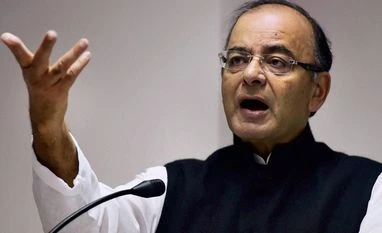
Rolling out a new fiscal consolidation roadmap, Finance Minister Arun Jaitley had said in the Budget that fiscal deficit would be brought down to 3.9% of GDP in 2015-16, and then further to 3.6% and finally to 3% by 2016-17 and 2017-18, respectively.
The Finance Minister had said the government would achieve the 3% fiscal deficit target by 2017-18 as against 2016-17 as it intends to increase public investment to boost growth.
As regards CAD, Jaitley said it will be less than 1.3% of GDP.

 "FinMin pitches India ratings upgrade to Fitch")


