Even as countries such as India are looking for ways to deal with tax evasion and black money, G20 urged member countries to be more serious about addressing these issues.
"More needs to be done to address the issues of international tax avoidance and evasion, in particular through tax havens, as well as non-cooperative jurisdictions," said the G-20 bloc in a joint statement of finance ministers and central bank governors last night in Washington.
G-20 or group of 20 comprises the G-7 (US, UK, France, Germany, Italy, Canada, and Japan) and emerging market economies such as India.
"We strongly encourage all jurisdictions to sign or express interest in signing the Multilateral Convention on Mutual Administrative Assistance in Tax Matters and call on the Organisation for Economic Co-operation and Development (OECD) to report on progress," said the G-20 leaders and central bank governors.
The statement assumes importance since many developing countries, including India, are trying hard to get information on money stashed away in foreign banks, and details of investments in tax havens.
According to a recent Global Financial Integrity (GFI) report, developing countries lost $5.86 trillion between 2001 and 2010 due to tax evasion, crime and corruption. India recorded an outflow of $123 billion during the period.
India is negotiating its bilateral treaty on avoiding double taxation with countries such as Mauritius to check misuse of the treaty by the third world countries. The joint statement also cautioned against negative side effects of extended periods of monetary easing.
The International Monetary Fund (IMF) recently warned that unconventional monetary policy, which includes prolonged periods of very low interest rates, quantitative easing or QE (a monetary policy to increase money supply), and indirect and direct credit easing can have harmful long-term consequences. Many quarters have expressed concern that increase in money supply in the advanced world would jack up commodity prices worldwide and have repercussions for emerging market economies such as India, which are struggling to contain inflation.
After standard tools turned ineffective in the wake of the collapse of Lehman Brothers, the US Federal Reserve resorted to quantitative easing of increasing money supply. The central bank on September 13, 2012 had announced a new $40 billion a month, open-ended bond purchasing programme of agency mortgage-backed securities.
It would also continue the extremely low rates policy until at least mid-2015, called QE3. This stimulus programme allows the Federal Reserve to relieve $40 billion a month of commercial housing market debt risk.
On 12 December 2012, the Federal Open Market Committee had announced to raise the amount of open-ended purchases from $40 billion to $85 billion a month. This is referred to as "QE4".
Similarly, the Bank of Japan announced it would inject $1.4 trillion into the Japanese economy to end deflation and push up economic growth. The Japanese economy is in a recession, and the country's exports are in a slump.
The G-20 statement said Japan should define a credible medium-term fiscal plan and that the large surplus economies should consider taking further steps to boost domestic sources of growth.
The members committed themselves to economic growth and job creation though implementing structural reforms in that direction, and that fiscal sustainability is essential in advanced countries.
The countries also called one another to desist from competitive devaluation of their currencies.
As the Euro zone struggles, the joint statement said, the foundations of economic and monetary union should be enhanced in the area, including through an urgent movement towards banking union, further reducing financial fragmentation, and continued strengthening of banks' balance sheets.
On US, it said further progress toward a balanced medium-term fiscal consolidation plan is necessary, although significant deficit reduction has already been achieved.
Heads of state and government of G-20 countries will next meeting in Russia in September this year.

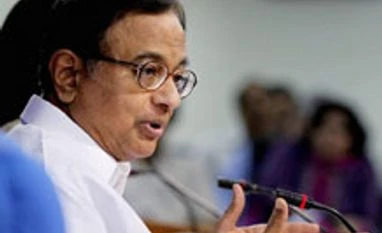 "G-20 asks member countries to act on tax evasion through havens")


 Connect with us on WhatsApp