The government is drawing up rules for individuals to file for bankruptcy.
An expert committee plans to exempt low level defaulters from constituting a committee of creditors.
“The individual will be planning the repayment plan as opposed to creditors who are allowed to work on a repayment plan in the case of corporate insolvency,” said a source.
The expert committee is also drawing up rules for bankrupt individuals who would like resolution.
It has recommended the minimum threshold for an individual to file for bankruptcy should be Rs 1 lakh. Those who can file for bankruptcy will be corporate guarantors, proprietary firms and individuals.
These matters will go to the debt recovery tribunal as opposed to corporate insolvency cases that are referred to the National Company Law Tribunal (NCLT).
The NITI Aayog is involved in framing the rules along with insolvency experts.
Although the Insolvency and Bankruptcy Code (IBC) has provisions to include individual bankruptcy case, these sections have not been notified yet. Plans are on to notify provisions under the bankruptcy law in three phases for corporate guarantors, proprietary business and individuals.
The bankruptcy law will help individuals who now have to go to district courts for filing bankruptcy cases. The provisions are likely to be in place by the end of the year.
Sections pertaining to corporate insolvency, voluntary liquidation and fast-track insolvency have been notified. The government notified the fast-track resolution process for start-ups, bringing down the resolution time to 90 days from 180 days.
The usual corporate insolvency process takes 180 days and the NCLT can allow an additional 90 days for resolution. Voluntary liquidation is for firms that want to wind up their business.
The government has also notified sections pertaining to cross-border insolvency and is working on rules for cross-border insolvency.
Under the insolvency provisions, a number of big-ticket cases has been filed. The aim was to help creditors recover debts soon and help companies restructure in a timely fashion.
KEY TAKEAWAYS

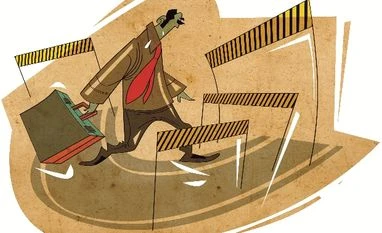 "Govt is drawing up rules for individuals to file for bankruptcy")












 Connect with us on WhatsApp