In the mid-term review of the foreign trade policy, the government has unveiled several initiatives to improve the ease of doing business.
The government has introduced a new scheme that allows duty-free import of inputs for exports production after a self-declaration, as against the earlier exercise of getting a ratification from the norms committee first. This scheme, which will initially be available to authorised economic operators, will help reduce the turnaround time in sectors such as pharmaceuticals, chemicals, textiles, and engineering.
“The trust-based self-ratification scheme to procure raw materials duty free with a self-declaration, as against getting the same ratified with the norms committee for inputs to be used in the manufacture of export products, is certainly going to scale up the capacity to cater to the global demand,” said Aditya Singhania, deputy general manager, GST, Taxmann.
“This is a strategic step, which will significantly reduce the time taken in getting the clearances from the norms committee for duty-free procurement. With this step, the exporters can self-certify the requirement of duty-free inputs and take authorisation from the DGFT (Directorate General of Foreign Trade),” Singhania said.
The government has made the import of second-hand goods for the purpose of repair/re-furbishing/re-engineering free, which it says would facilitate employment generation. To improve the ease of trading, the mid-term policy has envisaged the creation of professional teams to handhold, assist, and support exporters with their problems, accessing export markets, and meeting regulatory requirements. It has also called for reducing the dwell time at inland container depots, ports, and airports through coordination among the customs and infrastructure ministries.
A national trade facilitation committee will be set up which would cover issues such as simplification of procedures, infrastructure, and risk-based assessment. The round-the- clock customs clearance facility has been extended to 19 seaports and 17 air cargo complexes. Separately, the CBEC has done away with routine printouts of documents such as GAR 7 forms/TR6 challans, shipping bills, etc.
The review calls for the creation of a new logistics division, which will facilitate the integrated development of the logistics sector by suggesting changes in the policy, identification of bottlenecks, and improvement in existing procedures.
Further, it states that procedures for applying for IEC are being simplified, while procedures for the export obligation period extension have been simplified as has the procedure for the installation of machinery under the EPCG scheme.
Export-oriented units (EOU), and electronic hardware and software technology parks (EHTP, STP) have been allowed to import from bonded warehouses in domestic tariff areas (DTA) without payment of customs duty and integrated tax and GST compensation cess, while inter-unit transfer from one EOU/EHTP/STP to another has been allowed after the payment of duties and taxes.
Read this article for free
Register to continue reading premium journalism and analysis from Business Standard.

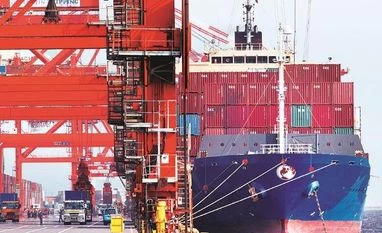 "Govt simplifies export procedures")












 Connect with us on WhatsApp