Grain stock ample to tackle drought, says Centre
At end-April, foodgrain stock in the pool was estimated at 36.95 mn tonnes, 6.7% more than at the same time last year
Sanjeeb Mukherjee New Delhi As a drought and drinking water crisis grips several states, the food stock position in the central pool seems to be among the few comfort factors for the government.
At end-April, foodgrain stock in the pool was estimated at 36.95 million tonnes, 6.7 per cent more than at the same time last year and 15.4 mt more than required by the rule on buffer and strategic stock.
Even if there is a minor blip in wheat procurement in 2016-17, which many are predicting because of a fall in production, there won't be a shortage of grain for the Public Distribution System (PDS) or the National Food Security Act (NFSA).
The Supreme Court had in recent judgments castigated the Centre and state governments for not being able to provide grain to drought-affected regions but that seems more of a management issue. The court's particular ire was on the Bundelkhand region of Uttar Pradesh; the state government adopted NFSA only in January and the time taken for transition from the ongoing PDS system is given as a reason for its inability to provide grain.
UP, by central data, would cover 92 per cent of its population under NFSA once the Act is fully implemented, 80 per cent in rural areas and 65 per cent in urban areas. There will be coverage for the Antyodaya Anna Yojana (AAY) as well. NFSA mandates that coverage of beneficiaries in rural areas should be a minimum of 75 per cent of the population and at least 50 per cent in urban areas.
In 2015-16, UP was allocated 7.47 mt of foodgrain, of which it lifted 97.5 per cent. For Below Poverty Line and AAY families, the total offtake exceeded 100 per cent.
In fact, the data show that among the 10 drought-hit states, barring Telangana, Karnataka and Jharkhand, foodgrain offtake from the central pool's allocation in 2015-16 had exceeded 95 per cent.
For Telangana, the Centre allocated 1.46 mt for all categories of beneficiaries and total offtake was 87.3 per cent. In Jharkhand, against a total allocation of 1.46 mt, offtake was almost 1.1 mt or 75.1 per cent. In Karnataka, against allocation of 2.6 mt, the state lifted 2.23 mt or 86 per cent.
In all for 2015-16, the central government allocated 52 mt of grain to states for targeted PDS operations and also under NFSA. The total offtake was 49.5 mt or almost 95 per cent.
"This clearly shows the problem is not at our end," Food Minister Ram Vilas Paswan recently told this newspaper. If any starvation-related death occurred in a state which had implemented NFSA, he said, the onus should be on that government, as the Act mandates maximum coverage. And, the Centre says its data show of the 10 drought-hit ones, NFSA covers all the poor in four states and 99.9 per cent in two more.
So, if the identification process has been as it should, all the eligible poor in these states should have got their quota under NFSA or targeted PDS. Jharkhand is the only state with a coverage below 90 per cent.

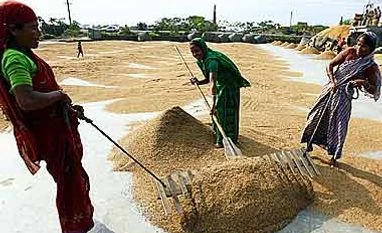 "Grain stock ample to tackle drought, says Centre")


 Connect with us on WhatsApp