GST rollout: Commexes to face short-term headwinds

Rollout of new tax regime may dissuade investors from putting their money in agri-commodity market
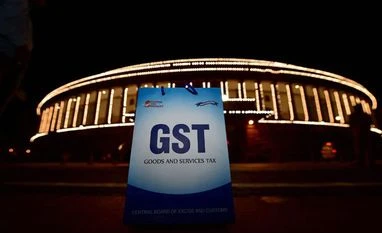
GST
The Goods and Services Tax (GST) is a uniform indirect tax levied on goods and services across the country. Photo: PTI
Dilip Kumar Jha Mumbai
Last Updated : Jul 05 2017 | 8:47 PM IST
The implementation of goods and services tax (GST) is likely to post short-term challenges for trading in commodity futures due to the transition into a new taxation system from July 1 and a concomitant increase in service tax to 18 per cent from an erstwhile levy of 15 per cent.

The GST roll-out may discourage players from infusing money in the agricultural commodities market. Lacking any escape route from the new tax regime, stockists and traders have resisted fresh buying, thereby, rendering the market weaker.  
GST is also expected to keep a check on the illegal trade practices, including the unaccounted transactions.

Usually, a majority of the trading volumes takes place in cash and hence, finds multiple ways to evade taxes. With the implementation of the GST regime, it will be difficult to carry out such transactions that involve non-disclosure of inventory amount or stocks. 

"GST is not only the biggest structural tax reform this country has ever seen, it is also going to bring in a new way of doing business. It will also help improve efficiency in the supply chain by enabling free movement of goods, bringing in transparency in trade and creating a pan-India market. While its implementation will pose short-term challenges, its long-term impact on the agri-economy is going to be extremely positive," said a spokesperson of National Commodity & Derivatives Exchange (NCDEX).

The government has kept a number of agricultural commodities under the “zero” per cent slab after the GST-rollout. However, the imposition of a commodity transaction tax (CTT) and an increase in service tax in trading, has proved to be a dampener for commodity futures trading.

In fact, commodity futures markets have been facing a weak trading sentiment for the last one year due to frequent changes in the regulatory guidelines and the rally in equity markets. Commodity exchanges have lost around a fourth of its average business volume over the last one year.

“At our end and as far as brokers are concerned, there will be no change other than the rate increasing from 15 per cent to 18 per cent. The impact in percentage terms, as constitution of overall cost, will be slightly different for each asset class,” said a spokesperson of the Multi Commodity Exchange of India (MCX).

Meanwhile, buyers are keeping an eye on the situation and have deferred their purchase till they gain some clarity on GST clauses dealing with processed and packaged food items. Also, market participants remain unclear as to how they would claim credit for values added tax (VAT) paid on stock bought in the pre-GST period. 

However, despite the given challenges, the overall impact of GST on the agricultural sector is expected to be positive. The new tax regime is considered to be essential in improving transparency, reliability and the timeline of the supply chain. A better supply chain mechanism would ensure a reduction of cost for both farmers as well as retailer due to less wastage.

Interestingly, while the various state mandi taxes would be abolished and merged under GST, any tax imposed by the local APMC will not change. Local APMCs will, in fact, continue to levy charges. For example, if a 1.5 per cent tax is imposed on a particular commodity as mandi cess in a particular state, then this tax will be merged under SGST. However, some other local taxes, imposed in the name of providing some added service at the local level, will continue to be levied by the local mandi.

“GST is part of a large number of measures that are being undertaken by the central government to transform and improve India’s soft Infrastructure. This is the latest project undertaken by the Centre and the states. GST implementation will catapult India’s tax infrastructure in a single step and is expected to improve ease of doing business in the country. The new regime is excepted to be much easier for taxpayers, as compared to current multiple tax systems encompassing state, centre and city-based taxes,” said Ashishkumar Chauhan, managing director and chief executive officer, Bombay Stock Exchange.

One subscription. Two world-class reads.

Already subscribed? Log in

Subscribe to read the full story →
*Subscribe to Business Standard digital and get complimentary access to The New York Times

Smart Quarterly

₹900

3 Months

₹300/Month

SAVE 25%

Smart Essential

₹2,700

1 Year

₹225/Month

SAVE 46%
*Complimentary New York Times access for the 2nd year will be given after 12 months

Super Saver

₹3,900

2 Years

₹162/Month

Subscribe

Renews automatically, cancel anytime

Here’s what’s included in our digital subscription plans

Exclusive premium stories online

  • Over 30 premium stories daily, handpicked by our editors

Complimentary Access to The New York Times

  • News, Games, Cooking, Audio, Wirecutter & The Athletic

Business Standard Epaper

  • Digital replica of our daily newspaper — with options to read, save, and share

Curated Newsletters

  • Insights on markets, finance, politics, tech, and more delivered to your inbox

Market Analysis & Investment Insights

  • In-depth market analysis & insights with access to The Smart Investor

Archives

  • Repository of articles and publications dating back to 1997

Ad-free Reading

  • Uninterrupted reading experience with no advertisements

Seamless Access Across All Devices

  • Access Business Standard across devices — mobile, tablet, or PC, via web or app

Next Story



