
GST structure to hurt SMEs, won't accept in its current form: Mamata
Incidentally, she was one of the first chief ministers to support the idea of a unified tax regime
 "GST structure to hurt SMEs, won't accept in its current form: Mamata")
premium
WebinarsNew
Deep DiveNew
Explore Business Standard
Incidentally, she was one of the first chief ministers to support the idea of a unified tax regime
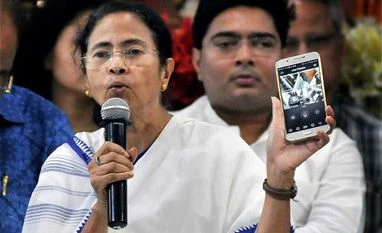
"We will write a strong letter to the Union Finance Minister. We will not support GST in its present form as it doesn't suit every section, especially the unorganised sector. They (Centre) have to rectify it," she said during an administrative meeting in South 24 Parganas district in the state.
Incidentally, when the Centre-State relations were cordial, she was one of the first chief ministers to support the idea of a unified tax regime. West Bengal Finance Minister Amit Mitra chaired the Empowered Committee of State Finance Ministers (ECSFM), which provided the forthcoming GST regime with its initial structure and layout.
The GST roll-out was also part of the Mamata Banerjee-led Trinamool Congress' (TMC) party manifesto during the 2011 Assembly elections.
Mitra will be attending the crucial GST Council meeting on June 3, where amid other agenda, a final call over the roll-out date will be taken. Mitra had skipped two previous meetings of the GST Council but had written a seven-page letter to the Council when it met in Srinagar, followed by another letter to Jaitley, which asked for a postponement.
Banerjee's opposition to GST is on grounds that it will hit the SME businesses across the country and particularly in West Bengal. The same was clarified by Mitra previously.
While Mitra gave himself credit for his role in ECSFM, which brought down a zero GST rate for essential items like a raw vegetable, foodgrain, leather, human hair, among others, he accused the Centre of tacitly taxing finished products derived from the raw produce.
While leather goods will be in the 12 per cent and 18 per cent GST slabs, processed edible items like potato pellets, cereal flakes and others will attract a five per cent tax. Rawhide had been kept in the five per cent tax bracket. For cottage cheese, while the unbranded items will attract a zero per cent GST, the branded ones will fall under the five per cent tax bracket. For books, several items have been classified under the zero and five per cent tax slabs.
"While human hair has been kept in the zero tax bracket, wigs and items made of human hair are taxed in the 28 per cent slab," Mitra had said on a previous occasion adding that it will affect the livelihood of 10,00,000 people in the East Midnapore district in West Bengal.
After the TMC government came to power in 2011, re-industrialisation of the state has been one of the key agendas of Mamata Banerjee. However, with limited big ticket investments in the state, Banerjee has been actively promoting the growth of SMEs in the state.
However, experts have opined that if the West Bengal government doesn't manage to pass the GST Bill latest by September 15, 2017, it will lose all legal powers to collect or levy any taxes.
Already subscribed? Log in
Subscribe to read the full story →

3 Months
₹300/Month
1 Year
₹225/Month
2 Years
₹162/Month
Renews automatically, cancel anytime

Premium stories handpicked daily by our editors


News, Games, Cooking, Audio, Wirecutter & The Athletic
Digital replica of our daily newspaper — with options to read, save, and share


Insights on markets, finance, politics, tech, and more delivered to your inbox
In-depth market analysis & insights with access to The Smart Investor


Repository of articles and publications dating back to 1997
Uninterrupted reading experience with no advertisements


Access Business Standard across devices — mobile, tablet, or PC, via web or app
First Published: Jun 02 2017 | 8:29 PM IST


 Connect with us on WhatsApp