GST to push India's economic growth rapidly: Vijay Kelkar
He said major central, state taxes will get subsumed, reducing multiplicity of taxes, bringing down compliance cost
Press Trust of India New Delhi The introduction of Goods and Services Tax (GST) is an important reform which will lead India into next rapid phase of economic growth, said former chairman of 13th Finance Commission Vijay Kelkar.
"The most important reform will be GST which will bring this country as one market. Launching of GST has taken us into next very rapid phase of growth," Kelkar, a noted economist, said at a Skoch summit here.
The major central and state taxes will get subsumed into GST which will reduce the multiplicity of taxes, bringing down the compliance cost. With GST, the burden of Central sales tax will also be phased out.
Currently, the GST Bill is stuck in Rajya Sabha.
"Now we are undertaking third generation reforms which are more difficult including land, labour and capital. They are difficult ones. These are absolutely essential to take this economy on the next growth trajectory," he said.
Kelkar also stressed on reforms in education sector to become a knowledge economy.
"If we really want to be a knowledge economy then we have to reform the education sector. Unless we reform our higher education, India will miss the boat in terms of new knowledge economy," he said.
In a recent presentation of education sector to Prime Minister Narendra Modi, NITI Aayog has suggested to build 10-20 world class institutions with academic autonomy and to create funds to provide annual project-based grants for research to potential institutes of excellence.
Kelkar further said: "The 1991 reforms were essentially driven by crisis the country was facing. The crisis in terms of balance of payments. We did not have enough foreign exchange to meet our requirements. That triggered the reforms programme."
He described the second wave of reforms launched by former prime minister Atal Bihari Vajpayee as consensus-driven reforms.
These reforms centred around important sectors including telecom, civil aviation and roads, which paid in terms of accelerated growth rate.
"No government went back on earlier government's reforms which accumulated further. Thus, India got accelerated growth decade-after-decade post 1991 reforms," he said.

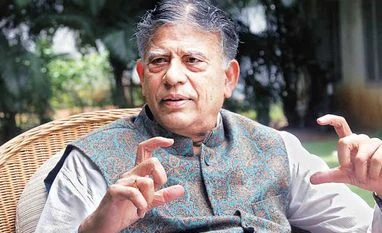 "GST to push India's economic growth rapidly: Vijay Kelkar")

