Home / Economy / News / Heatwaves may make India's inflation problem worse, hurt growth: Moody's
Heatwaves may make India's inflation problem worse, hurt growth: Moody's
Over the longer term, India's highly negative credit exposure to physical climate risks means its economic growth will become more volatile
premium
On May 15, India’s (Baa3 stable) capital, New Delhi, recorded a maximum temperature of 49 degrees Celsius, marking the fifth heatwave in the city since March
3 min read Last Updated : May 24 2022 | 12:42 AM IST
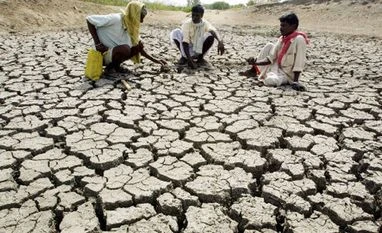
Rating agency Moody’s on Monday said that the prolonged elevated temperatures affecting much of the northwest of the country will curb wheat production and could lead to extended power outages. This may exacerbate already high inflation and hurting growth, a credit negative for the country.
Over the longer term, India’s highly negative credit exposure to physical climate risks means its economic growth will likely become more volatile as it faces increasing, and more extreme, incidences of climate-related shocks, Moody’s said in a statement today.
These risks contribute to the country's highly negative environmental risk issuer profile score and credit impact score.
On May 15, India’s (Baa3 stable) capital, New Delhi, recorded a maximum temperature of 49 degrees Celsius, marking the fifth heatwave in the city since March. Although heatwaves are common in India, they usually occur in May and June.
The Indian government has revised down its estimates for wheat production by 5.4 per cent to 105 million tonnes for the crop year ending June 2022, given lower yields amid higher temperatures.
The lower production, and fears that a surge in exports to capitalise on high global wheat prices would add to inflationary pressures domestically, has prompted the government to ban the export of wheat. Although the move will partially offset inflationary pressures, it will hurt exports and subsequently, growth.
Additionally, elevated power demand amid the heatwave and an uptick in economic activity – resulting in higher domestic power prices – prompted India’s Central Electricity Regulatory Commission (CERC) to cap power prices at INR12 ($0.1580) per kilowatt-hour in the electricity exchanges.
With suppliers importing coal at market rates to fill the shortfall and inadequate supply to meet peak demand, at least 16 out of 28 states experienced 2-10 hours of power outage per day in April. After the price ceiling was introduced on April 1, India’s total domestic coal actual stock fell 23 per cent by mid-May, with days of actual stock declining to 7.8 days from 10.0 days.
Further drawdowns in coal inventory could lead to prolonged power outages in industrial and agricultural production, leading to significant cuts to output. It may weigh further on India’s economic growth – particularly if the heatwaves continue beyond June.
Inflation will be partially alleviated by keeping wheat production for domestic consumption and the cap in power prices in exchanges, as well as the Reserve Bank of India's 40-basis-point policy rate rise in early May. However, given the prominence of cereals and food more generally in India's consumption, elevated food prices could add to social risks if they persist, it said.




