How the Russian war worsened India's fertiliser consumption balance

Researcher says the contributory margin of companies selling and importing MOP is negative due to inadequate subsidies on potash
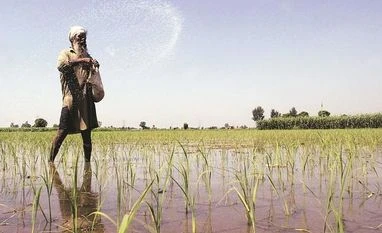
fertiliser
Industry players said India’s already distorted fertilizer consumption has further imbalanced in kharif 2022 to 12.8:5.1:1 compared to 6.8:2.7:1 in Kharif 2021.
Sanjeeb Mukherjee New Delhi
3 min read Last Updated : Dec 12 2022 | 6:15 AM IST
Fertiliser consumption in India, already imbalanced, became more lopsided this kharif season because of the Russia-Ukraine war, and this could have an impact on soil health in the long run.

There was a 39 per cent decline in sales of Muriate of Potash (MoP) during April-October as compared to the pre-Covid period of 2019 because farmers shunned this vital crop nutrient in favour of urea, di-ammonia phosphate and NPKS (sodium, phosphorus, potassium, and sulphur) because of high prices.

Even compared to April-October 2021, the sales of MoP for direct appli­cation dropped by almost 48 per cent. 

Industry players said consequently India’s distorted fertiliser consumption (NPK use ratio) had worsened in kharif 2022 to 12.8:5.1:1 as against 6.8:2.7:1 in Kharif 2021.

The ideal average NPK ratio for the country is 4:2:1. The distortion happened mainly because of a steep reduction in sales of potash, which dropped from 1.4 million tonnes in Kharif 2021 to 770,000 tonnes for Kharif 2022, a fall of almost 45 per cent.

“The retail price of MoP has been higher than that of DAP in recent months, which traditionally used to be the other way round. This has severely impacted consumption of potash. Which in turn has further imbalanced the already bad NPK use ratio,” a recent industry statement said.


The fact that the government’s subsidy on potash has been low as compared to nitrogen and phosphorus also meant importing companies had little option but to pass on the impact of the entire global price hike to farmers, leading to the slump in sales.

“At present, DAP is selling at around Rs 27,000 per tonne while MoP is quoting at around Rs 35,000 per tonne, which ideally should be the other way round,” a senior industry executive said.

“One way to correct this imbalance is to bring the per kilogram subsidy on potash on a par with phosphorus, which will cool retail prices,” the executive said. The government in its last revision of non-urea fertiliser subsidies reduced the subvention for potash from Rs 25.31 per kg fixed in April to Rs 23.65 per kg in October. The NPK use ratio was almost ideal at 4.3:2:1 in 2009-10 but got distorted to 8.2:3.2:1 in 2012-13. Thereafter, it was corrected to 6.5:2.8:1 in 2020-21, but widened to 7.7:3.1:1 in 2021-22.

Trade and industry sources said the biggest reason for the sharp spike in rates of MoP, which is imported almost in entirety, shot up in international markets after war broke out in Europe, leading to supply disruption. Russia Ukraine account for almost 40 per cent of global potash production.

“From $300-350 per tonne, global potash prices shot up to $700-900 per tonne after war started, but since then, though supplies have resumed because India has started sourcing it from Canada and the US, there is a demand-supply mismatch,” a senior researcher at a leading market analysis firm said. He said due to inadequate subsidies on potash, the contributory margin of companies selling and importing MoP was negative.

One subscription. Two world-class reads.

Already subscribed? Log in

Subscribe to read the full story →
*Subscribe to Business Standard digital and get complimentary access to The New York Times

Smart Quarterly

₹900

3 Months

₹300/Month

SAVE 25%

Smart Essential

₹2,700

1 Year

₹225/Month

SAVE 46%
*Complimentary New York Times access for the 2nd year will be given after 12 months

Super Saver

₹3,900

2 Years

₹162/Month

Subscribe

Renews automatically, cancel anytime

Here’s what’s included in our digital subscription plans

Exclusive premium stories online

  • Over 30 premium stories daily, handpicked by our editors

Complimentary Access to The New York Times

  • News, Games, Cooking, Audio, Wirecutter & The Athletic

Business Standard Epaper

  • Digital replica of our daily newspaper — with options to read, save, and share

Curated Newsletters

  • Insights on markets, finance, politics, tech, and more delivered to your inbox

Market Analysis & Investment Insights

  • In-depth market analysis & insights with access to The Smart Investor

Archives

  • Repository of articles and publications dating back to 1997

Ad-free Reading

  • Uninterrupted reading experience with no advertisements

Seamless Access Across All Devices

  • Access Business Standard across devices — mobile, tablet, or PC, via web or app

Topics :Russia Ukraine ConflictFertiliserKharif seasonSoil healthUreapotashfarmers

Next Story


