
ICEA seeks minimum base rate of 1.5% for electronics sector under RoDTEP
Mobile devices industry body ICEA on Wednesday sought a minimum base rate of 1.5 per cent for the electronic sector under the RoDTEP scheme to push exports.
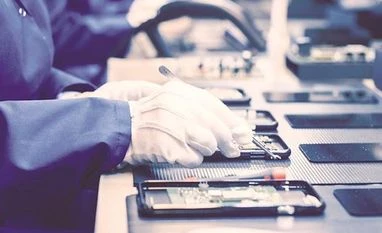 "ICEA seeks minimum base rate of 1.5% for electronics sector under RoDTEP")
WebinarsNew
Deep DiveNew
Explore Business Standard
Mobile devices industry body ICEA on Wednesday sought a minimum base rate of 1.5 per cent for the electronic sector under the RoDTEP scheme to push exports.
Mobile devices industry body ICEA on Wednesday sought a minimum base rate of 1.5 per cent for the electronic sector under the RoDTEP scheme to push exports.
The Remission of Duties and Taxes on Exported Products (RoDTEP) scheme, which allows refund of duties on exported products, has been made effective in India since January 1, 2021. However, the base rates to be applicable on various sectors and product categories are still in the works.
ICEA, whose members include Apple, Foxconn and Lava, estimates that the industry will pay indirect taxes to the tune of around Rs 6,000 crore on imported components for mobile production in the country, and part of it can be offset with the help of the RoDTEP scheme.
"Prioritisation in RoDTEP needs to be done. Since it is export-based and is supposed to refund the taxes, RoDTEP should run across all the sectors, particularly electronics that is significantly attuned to the stimulus which we have seen in MEIS," ICEA Chairman Pankaj Mohindroo said while releasing a joint report on RoDTEP with IKDVHAJ Advisors.
The report has suggested the RoDTEP base rate in the range of 1.5 per cent to 3.4 per cent on mobile phones and some components.
Export incentive schemes like the Merchandise Exports from India Scheme (MEIS) played a major role in boosting exports and localising manufacturing capacity.
The export incentive of 2 per cent under MEIS was offered for 372 electronic product lines since 2015, and an additional 2 per cent MEIS was notified for 121 tariff lines in December 2017 in response to the demand from the industry.
The report said that due to MEIS-like schemes, export of electronic goods increased 85 per cent substantially from around Rs 46,700 crore in 2017-18 to around Rs 81,800 crore in 2019-20.
The India Cellular and Electronics Association (ICEA) estimates that mobile manufacturing in the country will reach Rs 2.8 lakh to 3 lakh crore in 2021-22.
The MEIS was withdrawn as it was found non-compliant with WTO norms.
World Trade Organization former deputy director general Harsh Vardhana Singh said RoDTEP should be seen as an incentive scheme like MEIS but has been adopted by countries who want to avoid duplication of taxes and compete in the global market.
Mohindroo said there are several items that are still not covered under GST such as fuel which needs to be offset with the help of schemes like RoDTEP.
"Total GST that we pay is between Rs 36,000-Rs 38,000 crore. But, GST is refunded when you export. However, there are several items which have not been brought under GST and add to the disabilities which need to be addressed," Mohindroo said.
(Only the headline and picture of this report may have been reworked by the Business Standard staff; the rest of the content is auto-generated from a syndicated feed.)
First Published: Jan 20 2021 | 9:52 PM IST


 Connect with us on WhatsApp