Increasing dependence on natural gas comes with supply challenges for India

Dwindling gas reserves and higher demand can put further strain
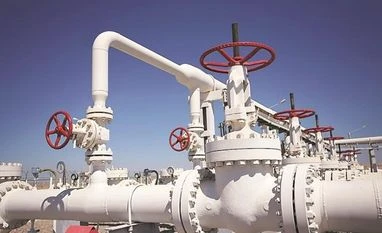
oil and gas
According to industry estimates, the share of natural gas has fallen to 6.3 per cent in FY21
Twesh Mishra New Delhi
5 min read Last Updated : Jul 14 2021 | 10:51 PM IST
India’s intention to increase the share of natural gas in the primary energy mix of the country will come with challenges of ensuring supply. Speaking shortly after taking charge as new minister for petroleum and natural gas, Hardeep Singh Puri reiterated Prime Minister Narendra Modi’s vision of a gas-based economy increasing the share of natural gas in primary energy mix of the country to 15 per cent by 2030.

According to industry estimates, the share of natural gas has fallen to 6.3 per cent in FY21. This is largely on account of dwindled gas output and higher energy demand of the country.

The target of 15 per cent itself, however, appeared to have been scaled down. According to the Vision 2030 report commissioned by the Petroleum and Natural Gas Regulatory Board (PNGRB), natural gas use was to have a share of 20 per cent by 2030. “It is envisaged that the share of natural gas in the primary energy mix would reach 20 per cent by 2030. However, to achieve a 20 per cent share of natural gas in primary energy it is required to attract and sustain investments in the gas infrastructure including the cross-country pipelines,” the vision document had said in 2013.

Lower share despite visions

This report was submitted when Former fertiliser Secretary, S Krishnan was the PNGRB chairman from 2011 to 2015. An earlier goal was to achieve a 20 per cent share of natural gas in India’s energy mix by 2025 itself.

Contrary to earlier visions, the percentage share of natural gas in India’s energy mix was 9.5 per cent in 2009, and 10.6 per cent in 2010. “The current natural gas consumption of India is 166 million metric standard cubic metres per day (mmscmd) in 2021. Of this, the share of Liquefied Natural Gas (LNG), that is imported, is about 54 per cent. We expect gas consumption to go up to 280 mmscmd by 2030. Out of which about 65 per cent will be imported. At this stage, the share of natural gas will be about 7.5 per cent of the country’s energy mix,” Debasish Mishra, leader, energy, resources and industrials (ER&I) for Deloitte in India told Business Standard.

Rising gas production

According to a report by the India Brand Equity Foundation (IBEF), a trust established by the Ministry of Commerce and Industry, India's natural gas production increased by 22.7 per cent year-on-year in April 2021, as Reliance Industries and its partner BP, increased production in the KG-D6 block on the east coast.

Public sector undertaking, Oil and Natural Gas Corporation (ONGC) is also projecting healthy growth in total gas output. It has announced that by May 2021, it would increase natural gas output from a KG basin block to 2.5-3 million standard cubic meters per day. The centre is expecting an investment of $2.86 billion for doubling natural gas production to 60 billion cubic metres and drilling more than 120 exploration wells by 2022.

Grim outlook for local supplies

The longer-term outlook for domestic gas production, however, complicates the situation. While the production has achieved pre-COVID-19 levels in 2021, the projections are not bright enough to match the expected share in the energy basket. “The natural gas reserves in India will be depleted by 2040, and the price of domestically produced gas will double due to scarcity. In fact, domestic gas production has been declining since 2011,” a study by researchers from Indian Institute of Technology, Bombay, and Monash University, Australia, concluded.

“To counter fuel shortages, the government will need to rely heavily on imported liquefied natural gas (LNG) brought in through cargo ships. Due to increased fuel prices, the largest consumers of domestic natural gas like power, fertiliser and transport sectors too will begin to rely heavily on imported LNG. Domestic gas will only be available to city consumers who use it for cooking,” the study by Vinod Vijay Kumar, Yogendra Shastri, and Andrew Hoadley said.

Preparing for imports

While hiking domestic gas output has been on the government’s agenda, it appears to be dependent on the need for more imports and it is working on this direction. A draft LNG policy, released by the Ministry of Petroleum and Natural Gas, aims to increase the country's LNG re-gasification capacity from 42.5 million tonnes per annum (mtpa) to 70 mtpa by 2030 and 100 mtpa by 2040. In February 2021, Petronet LNG announced its plans to increase in its Dahej terminal’s capacity by 29 per cent to 22.5 million tonnes per annum (mtpa) to meet the rising demand.

LNG is imported natural gas which is shipped on cyrogenic tankers in liquified form for ease of transport and then regassified at facilities set up by companies like Petronet LNG. “By the year 2022–23, India is set to begin importing natural gas through pipelines laid across the country’s borders. This would lead to a decrease in imported LNG as the urban households will shift to pipeline gas. Since LNG, which requires more processing than pipeline gas, is expensive, the reduction in its import will be helpful to the economy, and natural gas will be available to urban consumers at a cheaper cost. However, by the year 2040, there may be a scarcity in supply of the imported pipeline gas as demand will continue to increase,” the IIT-Monash study added.

One subscription. Two world-class reads.

Already subscribed? Log in

Subscribe to read the full story →
*Subscribe to Business Standard digital and get complimentary access to The New York Times

Smart Quarterly

₹900

3 Months

₹300/Month

SAVE 25%

Smart Essential

₹2,700

1 Year

₹225/Month

SAVE 46%
*Complimentary New York Times access for the 2nd year will be given after 12 months

Super Saver

₹3,900

2 Years

₹162/Month

Subscribe

Renews automatically, cancel anytime

Here’s what’s included in our digital subscription plans

Exclusive premium stories online

  • Over 30 premium stories daily, handpicked by our editors

Complimentary Access to The New York Times

  • News, Games, Cooking, Audio, Wirecutter & The Athletic

Business Standard Epaper

  • Digital replica of our daily newspaper — with options to read, save, and share

Curated Newsletters

  • Insights on markets, finance, politics, tech, and more delivered to your inbox

Market Analysis & Investment Insights

  • In-depth market analysis & insights with access to The Smart Investor

Archives

  • Repository of articles and publications dating back to 1997

Ad-free Reading

  • Uninterrupted reading experience with no advertisements

Seamless Access Across All Devices

  • Access Business Standard across devices — mobile, tablet, or PC, via web or app

Topics :natural gasoil and gasoil and gas reservesPetroleum sector

Next Story



