India remains the biggest arms buyer
The total volume of arms sales was up 14 per cent in 2009-13 compared to the previous five years
Press Trust of India Paris India remains the biggest buyer of arms in the world, importing nearly three times as many weapons as its nearest competitors China and Pakistan over the last five years, a Swedish think tank said on Monday.
The total volume of arms sales was up 14 per cent in 2009-13 compared to the previous five years, according to the Stockholm International Peace Research Institute (SIPRI). Indian imports of major weapons rose 111 per cent in the last five years compared to 2004-08. Its share of total global arms imports increased from seven to 14 per cent, SIPRI said.
India replaced China as the world’s biggest arms buyer in 2010. With its domestic defence industry struggling to manufacture high-tech arms, India is in the midst of a defence spending binge as it struggles to keep up with better-equipped Chinese forces and a range of military challenges in its volatile neighbourhood.
The main supplier of arms to India in 2009-13 was Russia, accounting for 75 per cent of all imports- reflecting India’s need to upgrade and modernise weapons systems dating back to their close relationship during the Cold War.
India has lately sought to diversify its sources, looking particularly to the US.
Figures from IHS Jane’s released in February showed that India became the biggest buyer of US weapons last year, with total imports worth $1.9 billion, and a string of large-scale purchases including Boeing's C-17A transport aircraft and P-8I Maritime Patrol Aircraft.
In 2009-13, however, the US still accounted for only seven per cent of India’s purchases according to SIPRI.
India’s traditional rival Pakistan increased its weapons acquisitions by 119 per cent, growing from two per cent of the global total to five per cent during that period.
The five largest arms suppliers worldwide between 2009 and 2013 were the US, Russia, Germany, China and France .
They collectively accounted for 74 per cent of total arms exports, SIPRI said.
The world’s top five arms importers were now India, China, Pakistan, the United Arab Emirates and Saudi Arabia.
“Chinese, Russian and US arms supplies to South Asia are driven by both economic and political considerations,” said Siemon Wezeman, senior researcher with the SIPRI Arms Transfers Programme.
“In particular, China and the USA appear to be using arms deliveries to Asia to strengthen their influence in the region,” Wezeman said.
Arms exports to Africa between 2004-08 and 2009-13 jumped 53 per cent. The three largest importers in the region were Algeria, Morocco and Sudan.
Imports by European nations decreased by 25 per cent between 2004-2008 and 2009-13.
Britain was the largest importer of major weapons in Europe (receiving 12 per cent of deliveries), followed by Azerbaijan (12 per cent) and Greece (11 per cent).

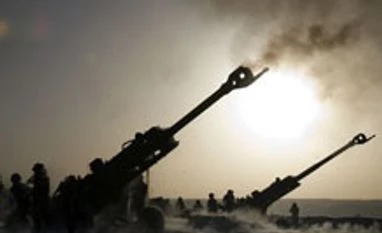 "India remains the biggest arms buyer")


 Connect with us on WhatsApp