In its second term in office, the BJP government has used its even larger parliamentary majority to push through significant but controversial political measures as economic challenges rise. It has been hesitant in implementing overdue economic reforms though.
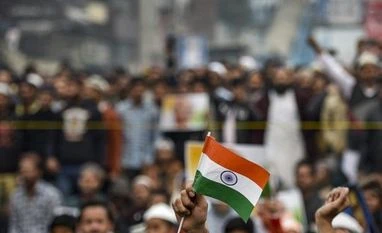
Despite protestations to the contrary, the change in the status of Jammu and Kashmir, the projection of the Supreme Court judgement on Babri Masjid as validating the BJP’s stand on building a temple at the site of the demolished mosque, and now the Citizenship Amendment Act (CAA) which excludes Muslims from availing Indian citizenship as “persecuted minorities” from Pakistan, Bangladesh and Afghanistan, all these point to an explicit agenda of projecting India as a country where the majority population of Hindus have a prior and preferential claim over the state and its resources.
The political capital that India built up over the several decades as a secular and plural democracy has been eroded and this will hurt its international image, particularly among liberal western democracies. The negative fallout may be more in civil society, media and even among elected politicians in these countries, less among governments. This has been apparent in the recent 2+2 India-U.S. dialogue held in Washington where there was careful avoidance of any public and official expression of concern over political developments in India. However, the idiom through which stronger relations are pursued with these countries--all important partners of India--will be less in terms of shared political values. They will become more transactional in nature.
One of the significant achievements of the Modi government has been the development of closer relations with the Gulf states, in particular Saudi Arabia. This has served India’s energy security needs, promoted the welfare of a 6 million-strong Indian diaspora in the region, and partially neutralised Pakistan’s influence with the Islamic regimes. However, in case the situation in the Kashmir Valley refuses to normalise for an extended period of time or the state comes down with a heavy hand on Indian Muslims protesting against these measures, in particular the CAA, then it is likely that the current benign phase in India-Gulf relations may begin to turn sour.
It is too much to expect that foreign policy will not be influenced by domestic political compulsions particularly where neighbours are concerned. One of the strengths of India has been an overall political consensus on foreign policy despite competitive domestic politics. This needs to be restored. An effort must be made to insulate, as far as possible, external relations from being derailed by narrow domestic political calculations.
It is necessary to reach out to economic experts with professional skills and credibility to advise the government on a strategy to reverse the current economic slide. Whatever temporary measures may be required, there should be a reaffirmation of the economic reform and liberalisation policies pursued since 1991-92 and which brought rich dividends to the Indian economy. A commitment should be made to rejoining the RCEP. If indeed the choice is to go slow on globalisation then it is also necessary to wind down on an ambitious and expansive foreign policy and embrace more modest aims.

 "India's diplomatic space may shrink as govt picks hardline political agenda")











