Indian farmers can now trade in carbon credits to boost income

Farming contributes around 14% of the annual greenhouse gas emissions from India
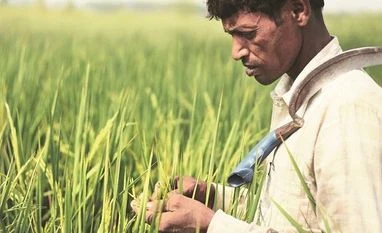
farmers, agriculture
Farmers can claim carbon credits for a host of regenerative agricultural practices such as not burning paddy straw, conservation agriculture such as not ploughing land, and laser levelling of land
Sanjeeb Mukherjee New Delhi
3 min read Last Updated : Mar 03 2022 | 6:02 AM IST
Days after the report of the Intergovernmental Panel on Climate Change (IPCC) about disastrous consequences of environmental factors on Indian agriculture, the Indian Agricultural Research Institute (IARI) will join hands with a private firm -- for the first time -- to build a marketplace for trading in carbon credits for farmers in the country.

“GrowIndigo India Ltd”, which is a collaborative effort between leading agriculture firm Mahyco and Indigo Ag, is executing a project with the IARI and International Wheat and Maize Improvement Centre (CIMMYT) to develop a first-of-its-kind marketplace for carbon trading for Indian farmers.

The IARI and CIMMYT will provide research- and science-based backup to the initiative. A formal agreement on this is expected soon.

Carbon credit trading in agriculture is a relatively nascent field in India and, with the IARI joining hands with a private firm, it can give a fillip to the segment, apart from providing alternative sources of earning to farmers.

Farmers can claim carbon credits for a host of regenerative agricultural practices such as not burning paddy straw, conservation agriculture such as not ploughing land, and laser levelling of land.

For each such practice undertaken, some credits that can be monitored will be generated. They will then be valued in accordance with standard international practices.

Companies that want to lower their carbon footprint, such as fertiliser manufacturers or airlines, but are finding it difficult to do so because of the nature of their business, can step in by directly purchasing credits from farmers, using the platform and its high-end technology.

“It is a win-win situation for both farmer and company in multiple ways. First, farmers are paid for adopting healthy agricultural practices that reduce carbon emission. They also benefit the soil, environment, and also their own surroundings while at the same time companies meet their targeted emission norms,” A K Singh, director of the IARI, told Business Standard.

Gradually when the marketplace develops, a farmer can voluntarily register himself on the platform and there will be ways and means jointly developed by the company and the IARI, such as satellite monitoring of paddy fields, to ensure that the commitment made by the farmer on reducing his carbon footprint is adhered to.

Carbon credits will be generated in accordance with globally accepted “Verra Protocols”, Singh said. The project will be initially for farmers in Punjab, Haryana, and the NCR, where the problems of paddy stubble burning are acute.

Singh said the platform and the concept, among other things, could generally be an additional source of earning for paddy farmers in North India, who every year struggle to dispose of their tonnes of stubble, causing widespread pollution.

Rough estimates show by not burning six tonnes of paddy straw in one hectare, a farmer can generate one carbon credit, worth around $10 in the market. If paddy straw is not burnt and ploughed back into the soil, the organic carbon content of the soil is enhanced, helping in improving fertility.

In Punjab, Haryana, and Western UP, the organic content of the soil where paddy is cultivated has over years dropped to 0.4-0.5 per cent while ideally it should be around 0.8 per cent. This is owing to intensive cropping using chemical fertilisers.
Grim picture
  • Farming contributes around 14% of the annual greenhouse gas emissions from India
  • Of this, 55% comes from the livestock sector alone  
  • As of 2019, CO2 emissions for India were 2.6 billion tonnes, studies show 
  • In the recent COP26 summit, India committed to reducing overall carbon emissions by 1 billion tonnes by 2030

One subscription. Two world-class reads.

Already subscribed? Log in

Subscribe to read the full story →
*Subscribe to Business Standard digital and get complimentary access to The New York Times

Smart Quarterly

₹900

3 Months

₹300/Month

SAVE 25%

Smart Essential

₹2,700

1 Year

₹225/Month

SAVE 46%
*Complimentary New York Times access for the 2nd year will be given after 12 months

Super Saver

₹3,900

2 Years

₹162/Month

Subscribe

Renews automatically, cancel anytime

Here’s what’s included in our digital subscription plans

Exclusive premium stories online

  • Over 30 premium stories daily, handpicked by our editors

Complimentary Access to The New York Times

  • News, Games, Cooking, Audio, Wirecutter & The Athletic

Business Standard Epaper

  • Digital replica of our daily newspaper — with options to read, save, and share

Curated Newsletters

  • Insights on markets, finance, politics, tech, and more delivered to your inbox

Market Analysis & Investment Insights

  • In-depth market analysis & insights with access to The Smart Investor

Archives

  • Repository of articles and publications dating back to 1997

Ad-free Reading

  • Uninterrupted reading experience with no advertisements

Seamless Access Across All Devices

  • Access Business Standard across devices — mobile, tablet, or PC, via web or app

Topics :Indian FarmersFarmers incomeCarbon emissions

Next Story


