Despite retail inflation falling in July, the Reserve Bank of India (RBI) has said inflation expectations are still high, an indication of its unwillingness to drop guard on this front.
“While consumer price inflation has moderated, inflation expectations among the public are still high, creating a gap between the real rates that savers expect and the rates corporations think they pay,” RBI Governor Raghuram Rajan said at a banking seminar on Monday.
High inflation expectations were among the three challenges faced by the country, Rajan said, adding the yet-to-recover economic growth and high stressed assets in the banking system were the others.
Concern about inflation had led to the central bank taking a long pause before cutting rates. So far this year, RBI has reduced the repo rate by 75 basis points. Banks, however, reduced their base rates only 25-30 bps. “Stressed assets in the financial system continue to be high, which holds back growth and new lending, even while dampening bank incentives to cut base rates,” Rajan said.
He added the central bank’s short-term macroeconomic priorities were aiding growth by reducing inflation, thus creating room for monetary easing; working with the Centre and banks on hastening the resolution of distressed projects; and cleaning up balance sheets.
“While low inflation for a while will lower the public’s inflationary expectations and increase their real disposable income, to achieve a sustainable victory against inflation, the public has to believe inflation will stay low even after commodity prices start picking up,” he said.
The RBI governor dismissed arguments that supply-side issues that increased inflation couldn’t be addressed with rate revision. “Perhaps, more informative is a recent study that suggests the disinflation in the past year and a half follows from a combination of good food management by the government, good luck because of external factors such as lower crude prices, and monetary policy, including the new framework. We believe this is a fair view of the disinflation so far, entirely uninfluenced by the fact that two of the three authors are from RBI,” Rajan said.
The research paper cited by him, ‘What is Responsible for India’s Sharp Disinflation’, was authored by Sajjid Chinoy, India economist, JP Morgan, Pankaj Kumar and Prachi Mishra. Kumar and Mishra are from RBI’s department of economic and policy research.
The central bank chief admitted stress in the banking system was still very high. Though RBI has initiated a 5/25 programme (a bank can offer a 25-year loan, which can be refinanced every five years), the central bank expressed concern that the rule wasn’t been followed in the right spirit. Rajan said soon, new norms would be announced to improve the functioning of the joint lenders’ forum (JLF), mandated to evolve a mechanism to resolve stress.
“We have discussed the experience with the JLF and with banks; soon, we will announce some measures that should improve their functioning,” Rajan said.

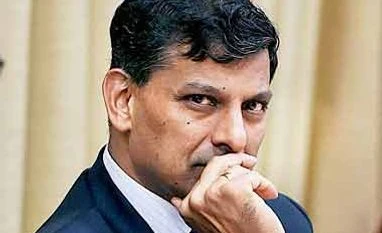 "Inflation fears still high, says Rajan")


 Connect with us on WhatsApp