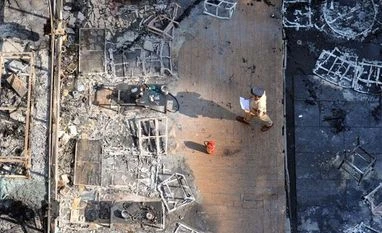
- Carlton Towers, Bengaluru, 2010; nine dead, 70 injured.
- SUM Hospital, Bhubaneswar, 2015; 22 dead, 120 injured.
- Surya Sen street market, Kolkata, 2013; 19 dead, ten injured.
- Amri (Dhakuria) Hospital, Kolkata, 2011; 73 dead.
- The Park Street, Kolkata, 2010; 16 dead.
- Kurla (West), Mumbai, 2015; eight dead.
- Kumbakonam, Thanjavur, Tamil Nadu, 2004; 83 dead, 27 injured – all school children.
- Srirangam, Tiruchirappalli, Tamil Nadu, 2004; 57 dead, 50 injured.
- Nand Nagri, east Delhi, 2011; 15 dead, 65 injured.
- The Victoria Park, Meerut, 2006; 65 dead, 81 injured.
- Paravur, Kollam, Kerala, 2016; 111 dead, 350 injured.
- Mudalipatti, Sivakasi, Tamil Nadu, 2016; 38 dead, 33 injured.
- Mudalipatti, Sivakasi, Tamil Nadu, 2012; 54 dead, 78 injured.
- Khusropur, Patna, Bihar, 2005; 35 dead, 50 injured.
According to National Crime Records Bureau figures, 17,700 Indians died – 48 people every day – due to fire accidents in 2015. Of those who died, 62% were women. Maharashtra and Gujarat, our two most highly urbanised states, account for about 30% of the country’s fire accident deaths. There is a close correlation between deaths due to fire-related accidents and population density associated with urbanisation.
In cities after cities, towns after towns, year after year, Indians are getting killed and burnt in fire incidents. Technically speaking, these are not accidents; they are man-made disasters, manufactured by a mix of half-baked regulations and compromised enforcement machinery and powerful interest groups. They are actually planning-made problems.
For example, every historical change in modes of warfare has produced a disposal problem in terms of trained and battle-hardened soldiers: what to do with much-eulogised and no-longer-needed troops. During the second term of US President Ronald Reagan, the disposal problem was: what was to be done with the Nicaraguan mercenaries, who were until then one of the major armies of Central America, and their ex-CIA Cuban and American handlers, a powerful constituency inside the Pentagon? In the 15th century, a problem much like this one – what to do with bloodthirsty knights who lived off the land – was a powerful motive for England to prolong the Hundred Years’ War and keep the knights busy in France.
After the unprecedented rain 2015, this increased run-off found its way into the city. While the unusual rains have caused the disaster, the impact would not have been so severe in the absence of the man-made factors. The planned developments along the Adyar river that reduced its capacity as an outlet are largely government initiated, as the river bed was under government ownership. All the swamps, marsh lands, low-lying areas and streams that the big corporations, middle-class housing and slums have been built on are inundated as they are at the receiving end of overflowing large regional tanks. The state’s inability to enforce environmental laws and insatiable greed for land grabbing by both national and international commercial interests are in full play in Chennai. Any endeavour to undo the damage done by the organised encroachers to Chennai’s watershed and wetland areas will have to start with breaking apart the bureaucracy-real estate business nexus.
One subscription. Two world-class reads.
Already subscribed? Log in
Subscribe to read the full story →
Smart Quarterly
₹900
3 Months
₹300/Month
Smart Essential
₹2,700
1 Year
₹225/Month
Super Saver
₹3,900
2 Years
₹162/Month
Renews automatically, cancel anytime
Here’s what’s included in our digital subscription plans
Exclusive premium stories online
Over 30 premium stories daily, handpicked by our editors


Complimentary Access to The New York Times
News, Games, Cooking, Audio, Wirecutter & The Athletic
Business Standard Epaper
Digital replica of our daily newspaper — with options to read, save, and share


Curated Newsletters
Insights on markets, finance, politics, tech, and more delivered to your inbox
Market Analysis & Investment Insights
In-depth market analysis & insights with access to The Smart Investor


Archives
Repository of articles and publications dating back to 1997
Ad-free Reading
Uninterrupted reading experience with no advertisements


Seamless Access Across All Devices
Access Business Standard across devices — mobile, tablet, or PC, via web or app
)