Meet new CEA Krishnamurthy- ISB professor, note ban supporter and more

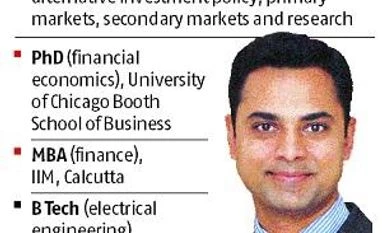
Subramanian topped his batch at the Indian Institute of Management, Calcutta, and graduated with a degree in electrical engineering from the Indian Institute of Technology, Kanpur

graph
graph
Arup Roychoudhury New Delhi
Last Updated : Dec 08 2018 | 6:30 AM IST
The government on Friday appointed Krishnamurthy Subramanian, associate professor and executive director of the Centre for Analytical Finance at the Indian School of Business (ISB), Hyderabad, chief economic advisor (CEA) for three years.

His tenure will start on the day he takes charge. Officials said he was expected to report to North Block in a few weeks. Subramanian’s predecessor, Arvind Subramanian, vacated office nearly three-and-a-half months back.

At the ISB, he teaches a course on corporate control, mergers, and acquisitions. His expertise is in banking and corporate governance.

Subramanian’s first major task as CEA will be contributing to the process of preparing the interim Budget before the Lok Sabha elections next year. He will also work on the Economic Survey for 2018-19, likely to be presented before the full Budget for 2019-20 in July. He is taking on the role at a time when growth has slowed to 7.1 per cent (July-September data), and debates are raging on liquidity and the credit situation in the financial sector. The country is also headed to elections, possibly in summer next year.

Old hand

Subramanian is not new to making policies. Known as “Subbu” to friends and students, he was a member of the Reserve Bank of India’s P J Nayak committee on governance of the boards of public sector banks (PSBs). He has also served on the Securities and Exchange Board of India’s (Sebi’s) committee on corporate governance, led by Uday Kotak.

He also contributed to the Economic Survey of 2014-15, according to his profile on the ISB website. Subramanian is a member of a number of other Sebi committees, including those on primary markets, secondary markets, inter-operability of exchanges, and alternative investments.

As part of his corporate policy work, Subramanian serves on the boards of Bandhan Bank, the first bank to be licensed since Independence in east India, the National Institute of Bank Management, and the RBI Academy.


Friends and opinions

Subramanian has a PhD from The University of Chicago Booth School of Business, where one of his advisors was former RBI Governor Raghuram Rajan, who has criticised various government policies since demitting office. He is also close to current RBI Deputy Governor Viral Acharya, whose speech in October had made the differences between the central bank and the government evident.

The friendship between Subramanian and Acharya is expected to open up another informal channel of communication between the government and the central bank. His predecessor Arvind Subramanian was reportedly not always on friendly terms with the RBI. 

 
The new CEA was at one time under consideration to become a member of the RBI’s monetary policy committee. He has written in favour of demonetisation, calling it a “revolutionary” move to fight corruption, also claiming that the perception of the poor suffering because of the note ban was overblown by the Opposition. 

However, he has not shied away from criticising the government either.

Subramanian has said the government’s decision to merge weaker banks such as Dena Bank and Vijaya Bank with stronger ones such as Bank of Baroda will not solve the problem of bad loans in the system, and more reforms were required to improve the financial health of PSBs.

A shining career

Subramanian topped his batch at the Indian Institute of Management, Calcutta, and graduated with a degree in electrical engineering from the Indian Institute of Technology, Kanpur. In previous academic roles, he has been on the finance faculty at Goizueta Business School at Emory University in the US. 

Before beginning his academic career, Subramanian worked as a consultant with JPMorgan Chase in New York. He also served in a management role in the derivatives research group at ICICI.

One subscription. Two world-class reads.

Already subscribed? Log in

Subscribe to read the full story →
*Subscribe to Business Standard digital and get complimentary access to The New York Times

Smart Quarterly

₹900

3 Months

₹300/Month

SAVE 25%

Smart Essential

₹2,700

1 Year

₹225/Month

SAVE 46%
*Complimentary New York Times access for the 2nd year will be given after 12 months

Super Saver

₹3,900

2 Years

₹162/Month

Subscribe

Renews automatically, cancel anytime

Here’s what’s included in our digital subscription plans

Exclusive premium stories online

  • Over 30 premium stories daily, handpicked by our editors

Complimentary Access to The New York Times

  • News, Games, Cooking, Audio, Wirecutter & The Athletic

Business Standard Epaper

  • Digital replica of our daily newspaper — with options to read, save, and share

Curated Newsletters

  • Insights on markets, finance, politics, tech, and more delivered to your inbox

Market Analysis & Investment Insights

  • In-depth market analysis & insights with access to The Smart Investor

Archives

  • Repository of articles and publications dating back to 1997

Ad-free Reading

  • Uninterrupted reading experience with no advertisements

Seamless Access Across All Devices

  • Access Business Standard across devices — mobile, tablet, or PC, via web or app

Next Story




